Dining Areas
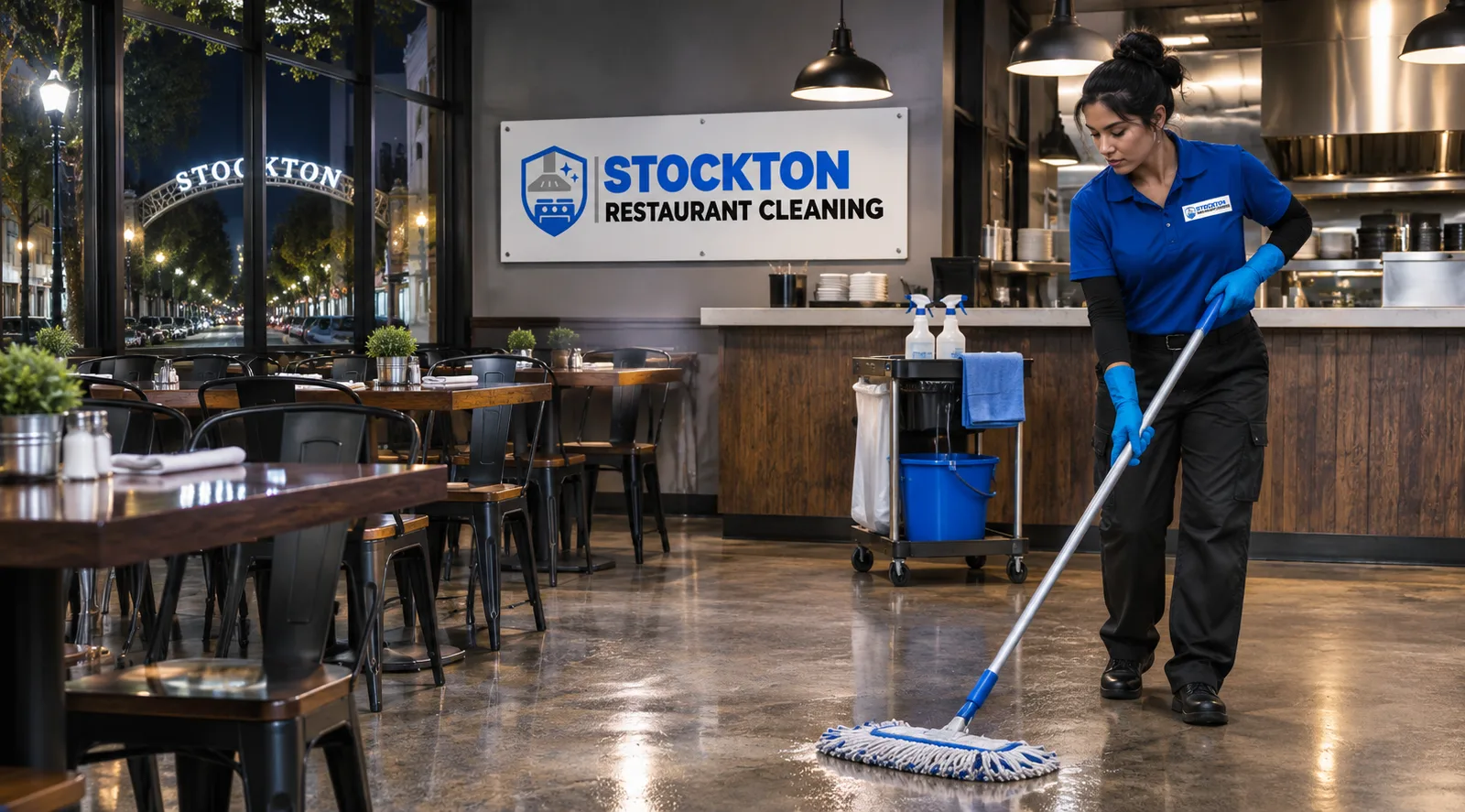
Tables, chairs, booths, partitions, ledges, floors, entrance glass, and guest-facing touchpoints are cleaned after the room is cleared. The scope identifies what must be reset before opening.
Serving Stockton, San Joaquin County, California & surrounding areas
Open 24/7
After-Hours Restaurant Cleaning in Stockton
Walk into a clean kitchen, dining room, and restroom after every scheduled overnight visit. We build the scope around your closing routine, hours, and inspection priorities.
Overnight Service Scope
Restaurant Night Cleaning starts after service winds down and finishes before employees return. Stockton Restaurant Cleaning coordinates entry, task order, alarm instructions, and completion times around your operating schedule. The goal is a repeatable result without interfering with guests, food preparation, deliveries, or opening duties.
Every account needs a written scope rather than a generic checklist, and an experienced restaurant team in Stockton understands the differences between a quick-service dining room and a full-service restaurant with a bar, banquettes, multiple restrooms, and a large back-of-house area. We identify which surfaces receive food-safe cleaning, which floors require degreasing, and which duties remain with restaurant employees.
Overnight restaurant cleaning can cover nightly, selected-day, or recurring service. The plan may include dining areas, front counters, restrooms, employee areas, kitchen floors, washable wall surfaces, and waste staging. Equipment interiors, hood systems, grease interceptors, pest control, and other specialized work should be listed separately if requested. Clear boundaries prevent missed duties and help managers evaluate each visit against the same standard.
Restaurant Janitorial Care
A practical scope follows the path soil takes through the restaurant. Crumbs, spills, tracked-in grit, and cooking residue collect differently across the front and back of house. High-touch points need a separate method from floors, and food-contact surfaces require products and procedures appropriate for those surfaces.
Dining-room work may include wiping tables and chair frames, cleaning booth seats, removing visible marks from partitions, vacuuming mats, and mopping hard floors. Front counters, host stations, door glass, handles, and payment-area surroundings can be added to the checklist. Clean tools should be separated by work area to reduce cross-contamination.
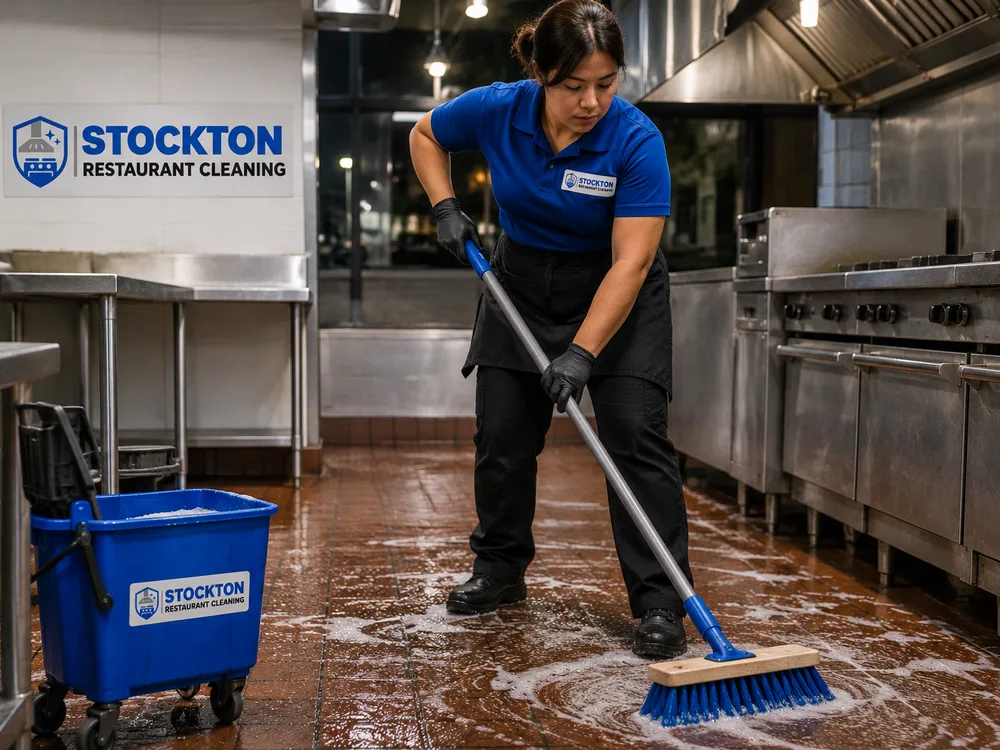
Back-of-house cleaning may cover floor edges, areas beneath movable equipment, washable walls, baseboards, drains, and accessible exterior equipment surfaces. Heavy grease needs dwell time before agitation and recovery. Degreaser should be compatible with the surface, and floors must be rinsed or recovered thoroughly so residue does not leave a slick film. Food, utensils, and exposed preparation items must be protected before chemicals are used.
Cleaning Areas
Tables, chairs, booths, partitions, ledges, floors, entrance glass, and guest-facing touchpoints are cleaned after the room is cleared. The scope identifies what must be reset before opening.
Accessible floors, edges, drains, washable wall areas, and equipment exteriors can be degreased and scrubbed. The method accounts for quarry tile, resilient flooring, grout, and other installed materials.
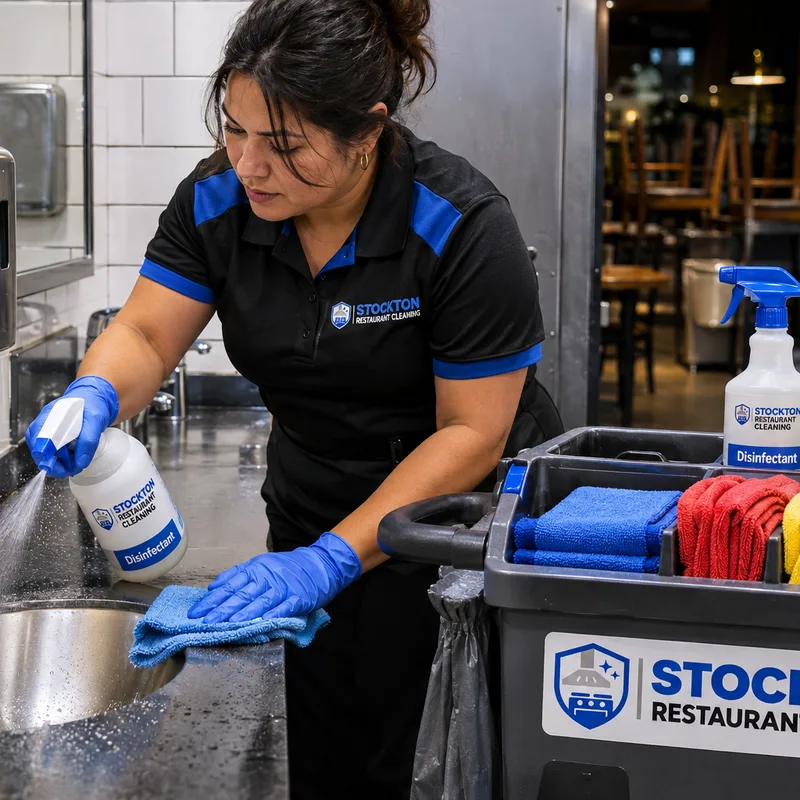
Toilets, urinals, sinks, counters, dispensers, partitions, mirrors, touchpoints, and floors receive a defined cleaning and disinfection sequence. Supplies can be replenished when stock is provided and included in the agreement.
Interior receptacles can be emptied, relined, and cleaned as specified. Waste is moved only to the designated collection area, with cardboard and other streams handled according to the restaurant's established process.
Periodic tasks may include floor-edge buildup, chair legs, vents within safe reach, baseboards, wall spotting, and other areas that do not need nightly attention. Rotation schedules keep these duties visible.
A location-specific checklist gives managers a consistent way to review completed duties. Access concerns, damage, low supplies, or conditions outside the agreed scope can be reported for follow-up.
Recurring Service Setup
We review the dining room, kitchen access, restrooms, storage limitations, floor materials, waste route, closing time, and required completion time. This visit also identifies sensitive surfaces and duties already handled by employees.
Each area receives specific tasks and a frequency. Nightly duties are separated from weekly or periodic detail work, and exclusions are recorded so managers know exactly what the restaurant janitorial company is responsible for.
The startup plan covers keys or approved access methods, alarm procedures, authorized work zones, emergency contacts, lighting, chemical storage, and final lockup. Access instructions should be limited to the people who need them.
Work proceeds in an order that limits recontamination. Restrooms use dedicated tools, high surfaces are addressed before floors, and kitchen cleaning is coordinated so employees are finished in each work zone.
Early visits are checked against the agreed standard. If business hours, menu operations, seating, or soil levels change, the checklist and service frequency can be revised rather than relying on informal instructions.
Restroom Sanitation
Restaurant restrooms affect a guest's view of the entire operation. Night cleaning should remove soil before disinfectant is applied, because cleaning and disinfection are separate steps. The product label controls dilution, surface compatibility, personal protective equipment, and contact time. A surface should remain wet for the label's stated contact time rather than being immediately wiped dry.
A complete restroom sequence addresses fixtures, partitions, sinks, counters, mirrors, handles, dispensers, and floors. High-touch points receive focused attention, while corners and the areas around fixture bases are checked for buildup. Color-coded or dedicated restroom cloths and tools should not move into dining or kitchen work zones.
California food facilities operate under the California Retail Food Code, and restaurants in Stockton are inspected through San Joaquin County Environmental Health. A janitorial crew does not replace the operator's food-safety program, but a clear cleaning plan supports orderly facilities and helps managers correct sanitation concerns before opening.
Stockton Scheduling
Local scheduling depends on how each restaurant trades. Downtown Stockton restaurants may need cleaning coordinated with late closing routines, nearby events, limited loading access, or shared waste areas. Restaurants around the Miracle Mile can have compact storefront layouts where the cleaning cart, wet-floor controls, and waste route must be planned around narrow back-of-house space. Larger commercial properties near Interstate 5 may have more parking and loading access, but exterior soil can travel farther through entrances and service doors.
Stockton's dry summer conditions can increase the dust and grit carried inside at entrances. Wet winter days add tracked moisture and soil. Entry mats, threshold cleaning, vacuuming, and floor care should therefore respond to actual conditions rather than remain fixed throughout the year. Grit left on hard flooring can abrade finishes, while grease residue in kitchen traffic lanes can create poor traction.
Daily restaurant cleaning is often the right fit for operations with regular evening service, but frequency should follow use. A restaurant open only on selected days may need cleaning after each service rather than every calendar night. Late-night venues need a realistic handoff time, while early-opening restaurants need a firm completion window that leaves floors dry and work areas available before prep begins.
Selecting a Provider
Compare providers by the clarity of their scope, not by a short list of general promises. The proposal should state the rooms covered, tasks, frequency, scheduled window, periodic work, consumable responsibilities, and exclusions. It should also explain how missed work, supply shortages, access failures, and requests outside the normal checklist are reported.
Ask how tools are separated between restrooms, dining spaces, and back-of-house areas. Confirm that safety data sheets are available for workplace chemicals and that products remain in labeled containers. Cleaning staff should follow product labels, use required personal protective equipment, place wet-floor signs, and avoid mixing chemicals. Bleach and ammonia products must never be combined because the reaction can release dangerous gas.
Consistency also depends on practical details: who updates the crew when closing runs late, how keys are controlled, which equipment may be moved, and what happens when a spill or buildup exceeds the normal scope. Restaurant Janitorial Services in Stockton should fit the actual operation. A detailed walkthrough and written plan provide a sound basis for comparing recurring proposals.
Set up a walkthrough to define the rooms, frequencies, closing window, access instructions, and inspection priorities for your restaurant.
Frequently Asked Questions
Nightly restaurant cleaning is usually priced after a walkthrough because labor hours, frequency, and soil level determine the rate. Cost changes with the restaurant's square footage, number of restrooms, kitchen floor condition, closing window, access, waste handling, and periodic detail work. A written proposal should separate routine duties from initial deep cleaning and specialized services.
Yes, overnight cleaning can be scheduled after a late close when the crew has a realistic completion window before opening prep begins. Stockton restaurants with changing weekend hours should provide a defined handoff process, alarm instructions, and a contact for delayed closings. The scope may need adjustment if employees remain in active work zones.
Service can be arranged daily, after selected operating days, or on another recurring schedule based on restaurant use. Busy dining rooms and restrooms may need attention after every service, while detail tasks can rotate weekly or at another agreed interval. The proposal records the frequency for each duty.
Food-contact surfaces are included only when they are specifically identified and an appropriate cleaning and sanitizing procedure is agreed upon. Restaurant staff often retain responsibility for preparation equipment, utensils, food storage, and certain cooking surfaces. The walkthrough should assign each duty clearly and account for California Retail Food Code requirements.
The start date depends on the walkthrough, scope approval, access setup, crew scheduling, and whether an initial detail clean is needed. A Stockton location with keys, alarm procedures, chemical storage, and closing times already documented can usually be set up more efficiently than a location that still needs those controls established.
Yes, a recurring cleaning plan should be revised when operating hours, seating, equipment placement, traffic, or grease load changes. Managers should request a scope review rather than pass permanent changes through informal notes. The updated plan can adjust task frequency, staffing time, and completion deadlines.
Plan After-Hours Service
Tell Stockton Restaurant Cleaning about your operating hours, floor plan, problem areas, and preferred frequency. We will use that information to prepare a clear scope for consistent after-hours service.