Cooking Line
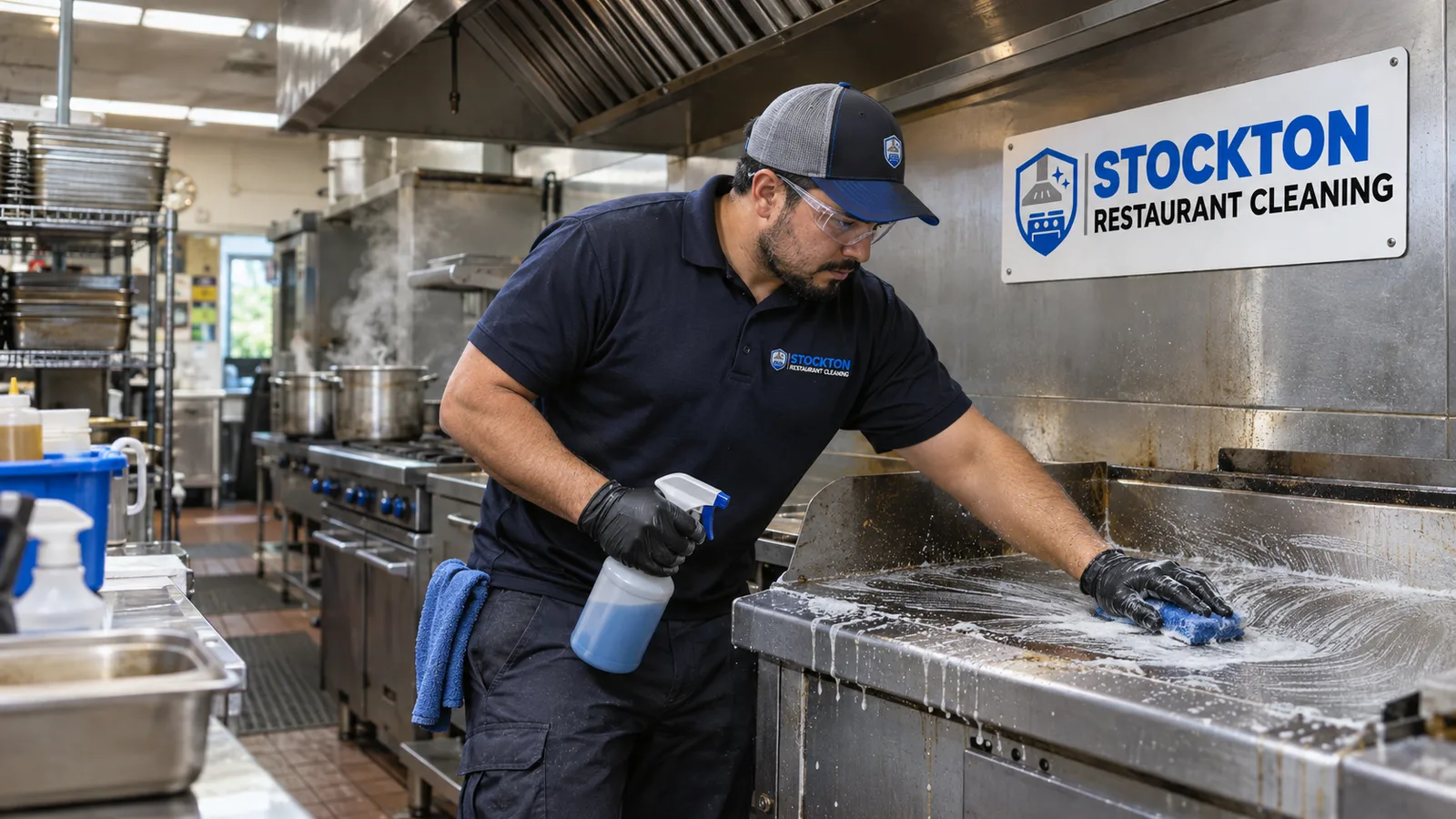
Degreasing for accessible range, griddle, fryer, oven, backsplash, side panel, and equipment-exterior surfaces. The exact equipment and whether it can be moved are documented before work begins.
Serving Stockton, San Joaquin County, California & surrounding areas
Open 24/7
Restaurant Cleaning Service in Lathrop
Detailed cleaning built around your hours, equipment, food-contact controls, and the condition of your kitchen.
Cleaning Scope
Commercial Kitchen Cleaning Lathrop work should begin with the kitchen itself: its cooking volume, equipment layout, operating hours, grease accumulation, and sanitation procedures. Stockton Restaurant Cleaning develops a written scope around those conditions instead of applying a generic checklist to every restaurant.
The work can cover cooking lines, prep areas, dishwashing zones, floors, walls, storage areas, and accessible equipment surfaces. High-touch points and hard-to-reach edges receive attention as well. Food-contact surfaces require the correct cleaning and sanitizing sequence, while floors and greasy non-food-contact surfaces need products suited to their soil load and material.
Based at 611 W Fremont St, Suite 4 in Stockton, Stockton's local restaurant service coordinates work for Lathrop operators. That nearby base supports practical scheduling for restaurants along the Interstate 5 and State Route 120 corridors, where service windows may need to fit around breakfast preparation, dinner close, deliveries, or overnight operations.
Commercial Kitchen Care
A thorough scope separates routine sanitation tasks from periodic deep cleaning. Routine work may include counters, sinks, exterior equipment surfaces, splash zones, floor edges, drains, and touchpoints. Deep cleaning addresses heavier grease and soil behind or beneath movable equipment, along baseboards, under shelving, around casters, and in corners that daily crews cannot easily reach.
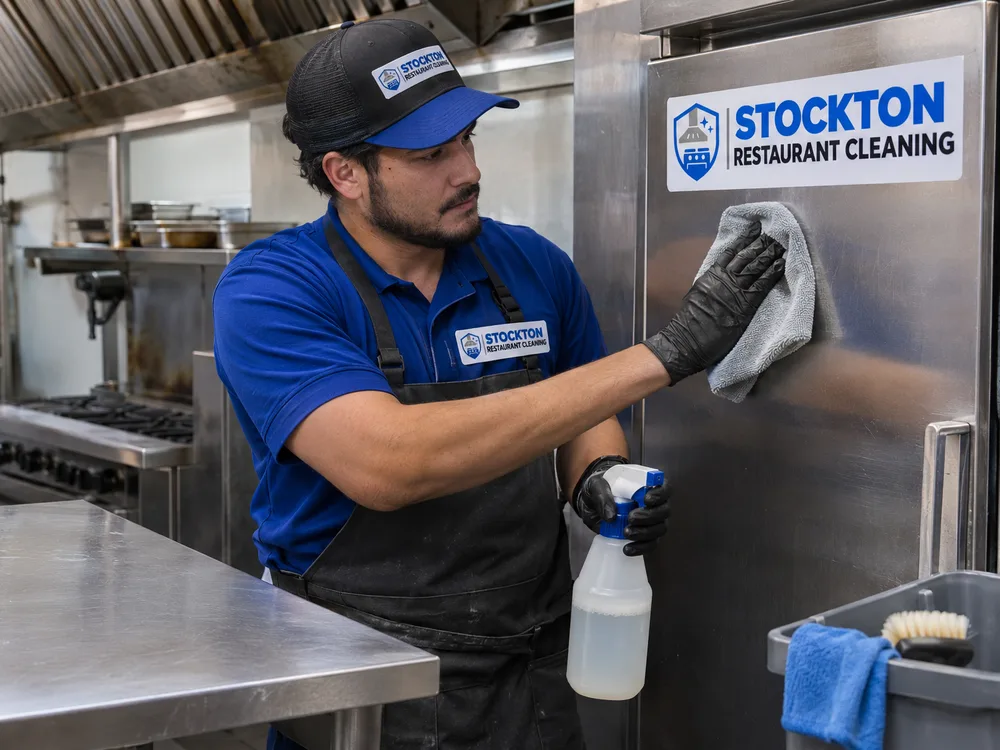
Cooking equipment is handled according to its surface and accessibility. Stainless steel requires nonabrasive methods that avoid scratching the grain. Griddles, fryers, ranges, ovens, and refrigeration exteriors may need different degreasers and dwell times. Removable parts are cleaned only when included in the agreed scope and when they can be handled safely.
Cleaning and sanitizing are distinct steps. Cleaning removes grease, food residue, and other soil. Sanitizing follows on compatible food-contact surfaces after they have been cleaned, rinsed when required, and treated according to the product label. Chemicals should never be mixed, and label instructions determine dilution, contact time, ventilation, and surface compatibility.
Cleaning Areas
Degreasing for accessible range, griddle, fryer, oven, backsplash, side panel, and equipment-exterior surfaces. The exact equipment and whether it can be moved are documented before work begins.
Cleaning followed by compatible sanitizing for included worktables, prep counters, sinks, and other food-contact surfaces. Product directions govern concentration and contact time.
Scrubbing targets grease film, tracked soil, corners, floor-wall junctions, and accessible drain areas. Methods are selected for quarry tile, sealed concrete, resilient flooring, or other installed materials.
Work may cover exterior machine surfaces, sink surrounds, shelving, wall protection, and floors. Clean stock and food items should be protected or relocated before service.
When restaurant cleaning extends beyond the kitchen, the scope can include tables, chairs, counters, touchpoints, and floors without taking attention away from back-of-house sanitation.
Scheduled detail cleaning can address buildup beneath movable equipment, on wall surfaces, around casters, and along low-access edges that routine closing work often misses.
Our Cleaning Process
We review the kitchen layout, equipment, floor materials, current soil conditions, access points, and operating schedule. The walkthrough also identifies items that must remain untouched or require staff preparation.
The written scope lists included areas, exclusions, frequency, access requirements, and the expected service window. One-time deep cleaning and recurring maintenance require different labor plans.
Food, utensils, small appliances, and clean wares are protected or moved as agreed. Equipment is shut down and cooled when necessary, and the crew establishes safe chemical and wet-floor controls.
Work generally proceeds from higher surfaces to lower surfaces and from less-soiled areas toward heavier buildup. Degreasers receive the label-directed dwell time before agitation and removal.
The completed areas are checked against the scope. Any access limitation, damaged surface, persistent staining, or maintenance concern observed during cleaning is reported before the kitchen returns to normal use.
Lathrop Service Windows
Lathrop's location at the Interstate 5 and State Route 120 junction shapes how many local businesses operate. Restaurants serving commuters, freight traffic, residents, and travelers may have narrow gaps between meal periods. A cleaning plan should account for the real shutdown window rather than assume the entire kitchen is available all night.
Mossdale-area restaurants near newer commercial development may need service timed around evening traffic and late closes. Businesses near Lathrop Road can face a different mix of commuter demand, deliveries, and daytime activity. Properties around Louise Avenue may require careful arrival planning when vendors and staff share limited loading or rear-access areas. These practical details affect crew entry, equipment cooldown, chemical dwell time, floor drying, and the final handoff.
Warm Central Valley conditions can also increase the urgency of removing grease and food residue promptly, particularly around cooking lines, waste-handling paths, and floor drains. Cleaning frequency should follow actual production volume and soil accumulation rather than a fixed calendar alone.
Scope Boundaries
Commercial kitchen cleaning may include accessible exterior surfaces around the cooking line, but it does not automatically include internal exhaust-system cleaning. Hood plenums, filters, ducts, and rooftop exhaust fans are specialized components. If those areas are part of the request, they should be identified separately and handled under an appropriate scope.
The same clarity applies to equipment interiors, heavy appliance movement, ceiling work, pest remediation, hazardous materials, and repairs. A good proposal states what will be cleaned, what preparation the restaurant must complete, and which tasks require another qualified provider. This prevents a general kitchen-cleaning appointment from being mistaken for equipment servicing or fire-suppression work.
For ordinary restaurant care, frequency depends on cooking methods and operating volume. A high-output fryer line often accumulates grease faster than a light-preparation kitchen. The best schedule combines daily staff sanitation with professional detail work at intervals based on visible buildup, slip risk, and access limitations.
Pricing Factors
Commercial kitchen cleaning in Lathrop typically ranges from $500 to $1,500 for a one-time deep clean, while large kitchens or severe grease buildup can cost $2,000 or more. Smaller maintenance visits may fall below that range.
Final pricing depends on kitchen size, equipment count, grease level, floor condition, access, appliance movement, service frequency, and whether dining areas are included. Overnight timing or a short completion window may also affect labor. The exact cost is confirmed after a facility walkthrough and written scope.
Arrange a walkthrough before the next deep clean so equipment access, operating hours, exclusions, and sanitation priorities are clear before work starts.
Frequently Asked Questions
Yes, service can be planned after closing when access and the available work window support the agreed scope. For Lathrop restaurants near the Interstate 5 and State Route 120 corridors, the schedule should account for late traffic, staff closing duties, equipment cooldown, and enough floor-drying time before the next shift.
A typical deep clean may take one full shift, but the actual time depends on kitchen size, grease accumulation, equipment access, and crew size. A compact prep kitchen may require less time, while a busy fryer line with buildup behind movable appliances may require a longer or phased service.
Food, utensils, small appliances, and clean wares should be removed or protected according to the preparation plan. Restaurant staff may also need to cool or shut down equipment. Heavy appliances are moved only when the scope allows it, connections are safe, and adequate clearance is available.
Food-contact surfaces can be sanitized when that task is included and the surfaces are compatible with the selected product. Soil and grease must be removed first, and the sanitizer must be used at its labeled concentration and contact time. The walkthrough identifies which prep tables, sinks, and counters are included.
The interval should be based on cooking volume, grease production, floor condition, and the reach of the restaurant's daily cleaning program. Heavy frying may justify frequent detail work, while a low-volume preparation kitchen may need it less often. Warm regional conditions make prompt residue removal especially important around drains and waste routes.
Limited work may be possible in isolated, inactive areas, but deep cleaning is usually safer and more effective when the affected zone is out of service. Wet floors, chemical use, equipment movement, and exposed prep surfaces must be controlled, so many Lathrop operators schedule the work after closing or during a planned shutdown.
Internal hood, duct, and exhaust-fan cleaning is not assumed to be part of a general kitchen-cleaning quote. Accessible exterior hood surfaces may be included, but the exhaust system requires a separately defined scope. The walkthrough confirms these boundaries before pricing.
Plan the Work
Tell Stockton Restaurant Cleaning about your kitchen, operating hours, equipment, and problem areas. We will help define a practical scope and service window for your Lathrop restaurant.