Cooking Line
Degreasing focuses on accessible equipment exteriors, control surrounds, splash areas, legs, casters, and the soil traps between adjacent units. Heat-baked grease may require repeated product application and agitation.
Serving Stockton, San Joaquin County, California & surrounding areas
Open 24/7
Commercial Kitchen Cleaning in Stockton
Detailed commercial cleaning for cooking equipment, prep areas, floors, walls, and the hard-to-reach spaces that collect grease during daily restaurant operations.
Cleaning Scope
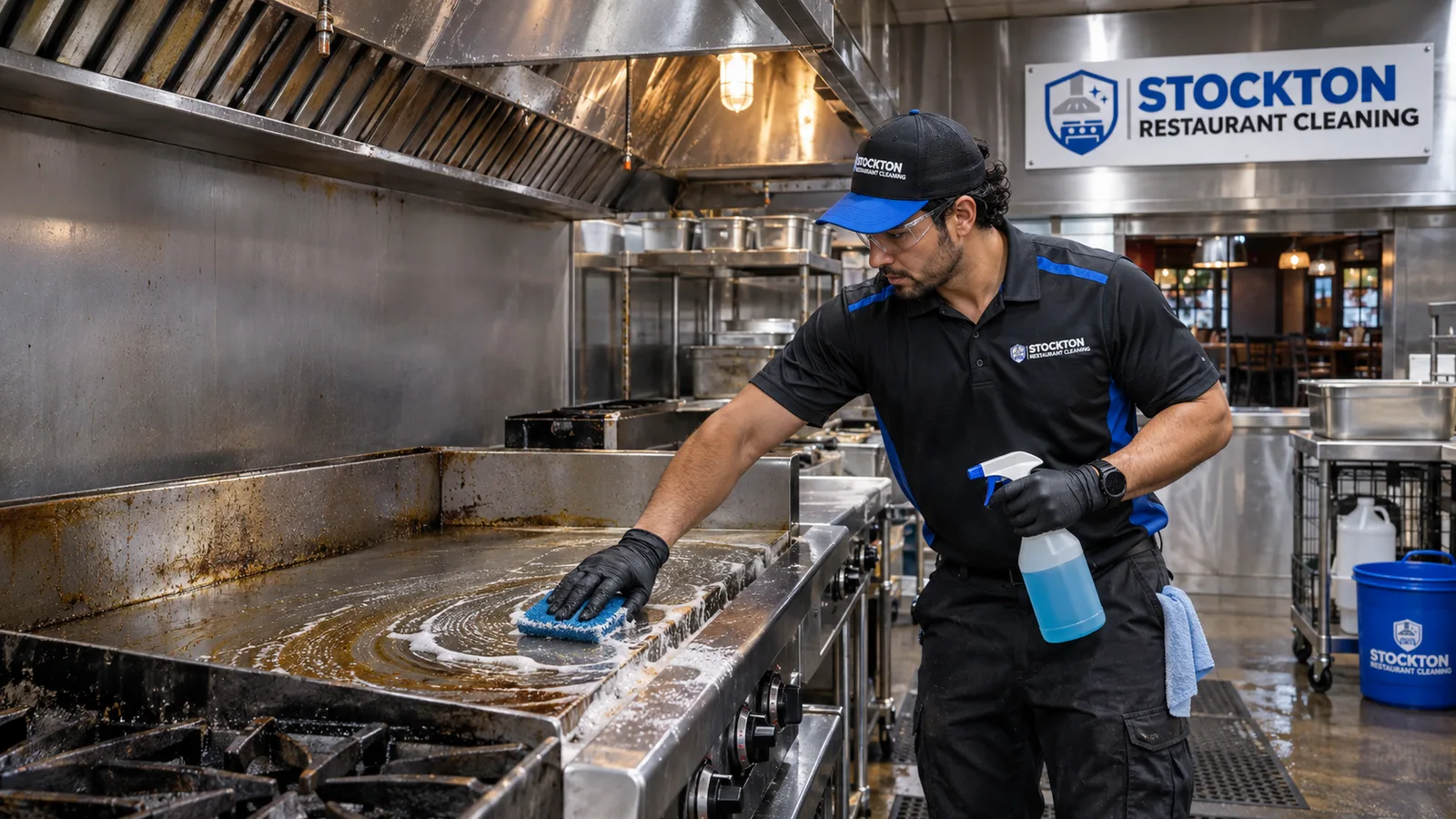
Kitchen Cleaning Services should address the places routine closing work cannot fully cover. Stockton Restaurant Cleaning removes accumulated grease, food residue, dust, and soil from commercial cooking and prep environments. The scope can include equipment exteriors, accessible spaces beneath and behind equipment, stainless steel surfaces, backsplashes, walls, shelving, floor edges, baseboards, and other high-use areas.
We plan the work around the kitchen's equipment, condition, access, and operating schedule. As a restaurant company Stockton homeowners rely on, we approach each job with a written scope and practical attention to occupied properties, shared access, and the needs of working kitchens. Restaurants near the Downtown Stockton Waterfront may need cleaning timed around service and event traffic, while Miracle Mile businesses often work within compact commercial spaces where equipment access requires careful sequencing.
A walkthrough identifies grease-heavy areas, sensitive surfaces, movable equipment, shut-down requirements, and any exclusions. That preparation gives managers a clear understanding of what will be cleaned before work begins.
Commercial Kitchen Care
A professional kitchen cleaning plan is matched to the facility rather than applied as a generic checklist. Common work includes degreasing accessible cooking-equipment surfaces, cleaning stainless steel, wiping shelving and storage exteriors, treating washable wall surfaces, scrubbing floors, detailing floor-to-wall edges, and cleaning reachable areas beneath or behind movable units.
Kitchen equipment cleaning may address fryers, ranges, ovens, griddles, preparation tables, sinks, refrigeration exteriors, casters, legs, and lower framework when access and manufacturer guidance allow. Cleaners use product dwell time to loosen grease before controlled agitation and removal. Food-contact surfaces require suitable products and the rinsing or sanitizing steps stated on the product label.
Exhaust hood, duct, and fan cleaning may require a qualified specialist and a separate scope. Likewise, internal appliance service, pest treatment, drain repair, and fire-suppression work are distinct services. These boundaries should be identified during the walkthrough so the cleaning plan accurately reflects the work being performed.
Cleaning Areas
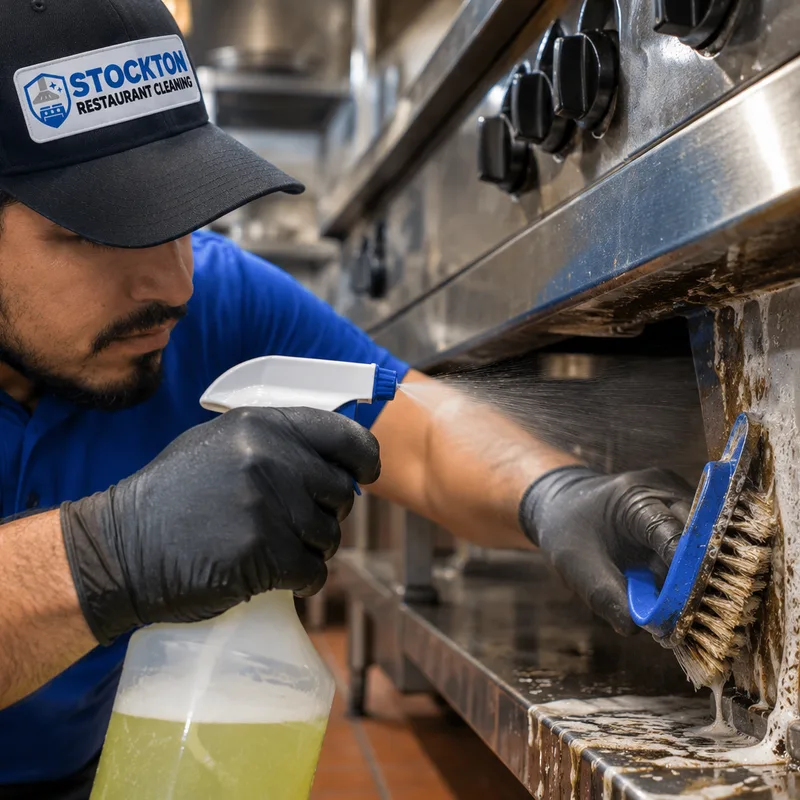
Degreasing focuses on accessible equipment exteriors, control surrounds, splash areas, legs, casters, and the soil traps between adjacent units. Heat-baked grease may require repeated product application and agitation.
Worktables, sink surrounds, shelving, backsplashes, and storage exteriors are cleaned with attention to residue around seams, handles, brackets, and wall junctions.
Scrubbing targets textured flooring, corners, baseboards, floor-to-wall transitions, and accessible spaces beneath equipment. The method accounts for slip hazards and safe wastewater handling.
Washable walls, doors, kick plates, switches, and other frequent-touch surfaces can be included when their materials tolerate the selected cleaning method.
Refrigerator and freezer exteriors, handles, gaskets, legs, casters, and reachable surrounding surfaces can be detailed without treating cleaning as mechanical appliance service.
One-time deep cleaning can support a menu change, management transition, equipment move, scheduled maintenance period, or reopening preparation.
Stockton Kitchen Conditions
Stockton's hot, dry summers can increase cooling demands inside restaurant kitchens, while cooking oils and airborne particles continue settling on nearby surfaces throughout the year. A useful deep-cleaning plan accounts for ventilation, drying time, chemical dwell time, and the need to return equipment to an orderly condition before the next shift.
Local access also changes how work is staged. Downtown properties may have limited loading access or shared service areas. Restaurants around Lincoln Center may need work coordinated with neighboring tenants and property rules. Kitchens serving the University of the Pacific area can experience sharp changes in demand around the academic calendar, making planned cleaning windows useful during quieter periods. In north Stockton, larger commercial footprints may involve longer cook lines, more cold-side equipment, and a wider floor area.
San Joaquin County Environmental Health is the local agency that conducts retail food facility inspections. Professional cleaning can support a restaurant's sanitation program, but it does not guarantee an inspection result or replace the operator's daily food-safety procedures.
Our Cleaning Process
We review the cooking line, prep areas, floors, equipment access, utilities, sensitive materials, and operational constraints. Managers can identify priority areas and known trouble spots.
The plan identifies included surfaces, equipment movement, exclusions, timing, and site responsibilities. If equipment must be cool, emptied, disconnected, or moved by restaurant staff, that requirement is established in advance.
The crew protects adjacent areas, organizes tools, and applies products suited to the surface and soil. Degreasers need adequate dwell time, but they cannot be allowed to damage finishes or dry indiscriminately.
Grease and residue are loosened with appropriate pads, brushes, scrapers, or controlled equipment. Cleaners work through edges, legs, casters, seams, and other accessible collection points.
After cleaning and orderly reset, the crew checks the agreed areas with the manager or designated contact. Any inaccessible area or condition requiring repair is documented rather than hidden.
Professional Kitchen Care
Commercial kitchens combine heat, grease, water, electrical equipment, stainless steel, resilient flooring, and food-contact surfaces. Cleaning them safely requires more than stronger chemicals. Product selection, dilution, dwell time, agitation, rinsing, ventilation, and surface compatibility all matter.
A professional crew also brings a planned sequence. Dry debris should be removed before wet cleaning where appropriate. Grease is treated before floors receive their final cleaning. Cleaned areas are protected from soil released later in the process. Equipment is moved only when it can be handled safely and returned correctly.
Managers receive the most value when the scope is specific. Ask which surfaces are included, whether equipment interiors are excluded, who moves heavy appliances, how wastewater is managed, and what must happen before the crew arrives.
Reliable professional kitchen cleaning starts with a defined sequence, suitable products, safe equipment access, and clear responsibilities.
A kitchen walkthrough can turn a broad cleaning request into a clear scope based on your equipment, grease buildup, access, and operating hours.
Frequently Asked Questions
Pricing depends on kitchen size, equipment count, grease buildup, access, and the amount of labor required. A compact prep kitchen with light soil is different from a full cook line with fryers, ranges, movable equipment, and heavy residue. After reviewing the facility, Stockton Restaurant Cleaning can define the included areas and provide pricing tied to that scope.
A detailed cleaning may take several hours or a full shift, while larger or heavily soiled kitchens can require a longer window or phased work. Cooling equipment, clearing prep surfaces, moving approved items, and arranging access before arrival can reduce delays. Downtown Stockton loading restrictions or shared commercial access may also affect scheduling.
Yes, restaurant kitchen cleaning can often be planned after closing, on a dark day, or during another approved shutdown window. The right time depends on staffing, noise limits, equipment cooldown, building access, and the time surfaces need to dry before food preparation resumes.
Interior equipment cleaning must be confirmed in the written scope because appliance design, temperature, disassembly, electrical connections, and manufacturer instructions affect what can be cleaned safely. Exterior degreasing and accessible detailing are commonly considered separately from internal appliance cleaning or mechanical service.
Exhaust-system cleaning should be treated as a separate, clearly identified scope unless it is specifically included. Hood plenums, filters, ducts, rooftop fans, and fire-suppression components involve requirements beyond ordinary surface cleaning. The walkthrough should distinguish general canopy surface cleaning from specialized exhaust-system work.
The interval should be based on cooking volume, menu, equipment, grease production, daily cleaning quality, and facility requirements. Fry-heavy operations may need attention more frequently than a low-volume prep kitchen. A manager can use repeated inspections of equipment sides, floor edges, walls, casters, and spaces beneath the cook line to set a practical schedule.
Staff should follow the agreed preparation list, which may include securing food, clearing work surfaces, cooling equipment, identifying sensitive items, and providing authorized access. Heavy equipment should not be disconnected or moved unless responsibility for that task was established during the Stockton facility walkthrough.
Plan the Work
Tell Stockton Restaurant Cleaning about your kitchen, equipment, operating schedule, and priority areas. We will help define a practical scope for one-time deep cleaning or recurring service.