Restaurant Cleaning in Stockton

Restaurant Cleaning Services

Detailed cleaning for dining rooms, bars, restrooms, floors, and back areas, scheduled around your operating hours.

✓ Guest-facing and back areas
✓ Scheduled around operating hours
✓ Written scope by property
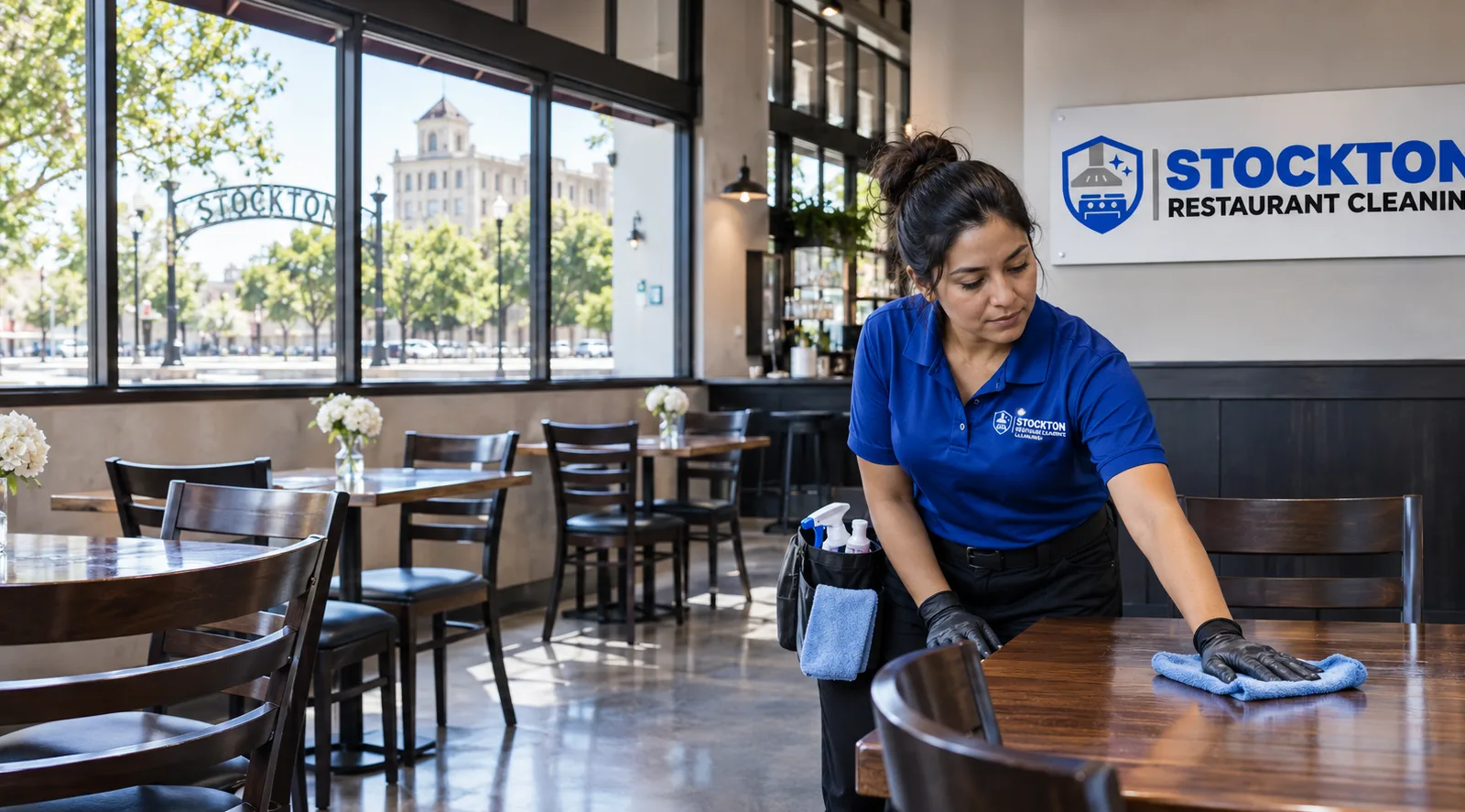
A professional cleaner using a microfiber cloth on tables in a spotless Stockton restaurant dining room while the business is closed.

Cleaning Scope

A Cleaner Restaurant Before the Doors Open

Restaurant Cleaning Services should support the way your business operates. Dining rooms need to look ready for guests, restrooms need close attention, and floors must be cleaned without leaving sticky residue or slippery patches. Grease film, crumbs, fingerprints, dust, and tracked-in soil all require different tools and methods.

Stockton Restaurant Cleaning builds the work around your floor plan, opening hours, traffic, and trouble spots. With Stockton's trusted restaurant team doing the work, agreed tasks are documented and completed through a repeatable routine so managers know what is being cleaned. Service can be arranged for a single deep clean or a recurring schedule, subject to the needs and access requirements of the property.

The local setting affects the plan. Downtown Stockton restaurants may have compact layouts, older finishes, or limited service access. Lincoln Center dining businesses often have prominent guest-facing glass, patios, and steady foot traffic. Waterfront venues near the Stockton Arena and Banner Island Ballpark can experience heavier traffic around events. Restaurants near the University of the Pacific may need scheduling that accommodates academic calendars and evening activity. These conditions influence timing, floor care, entry cleaning, and staffing.

Working Areas

Restaurant Cleaning Services for Every Working Area

Front of House Cleaning

Front of house cleaning covers entrances, host stations, waiting areas, partitions, ledges, tables, chair frames, baseboards, and other guest-visible surfaces. Fingerprints, crumbs, dust, and smudges are removed without disrupting the room's setup.

Dining Area Cleaning

Restaurant dining room cleaning addresses tabletops, booth seats, chair legs, window sills, wall spots, vents, and floor edges. Cleaners work around furniture and pay attention to corners where crumbs and soil collect.

Restaurant Bar Cleaning

Bar cleaning can include counters, stools, foot rails, exterior cabinet faces, mirrors, shelving exteriors, and the floor around service stations. Product handling and food-contact sanitation remain the responsibility of the restaurant unless specifically included in the written scope.

Restaurant Restroom Cleaning

Restrooms are cleaned with color-coded tools to reduce cross-contamination. The routine can cover toilets, urinals, partitions, sinks, dispensers, mirrors, touchpoints, floors, and odor-prone edges around fixtures.

Restaurant Floor Cleaning

Floor care is matched to the surface. Luxury vinyl tile, ceramic tile, quarry tile, sealed concrete, and resilient flooring require suitable chemistry, dwell time, agitation, and recovery methods.

Back of House Cleaning

Restaurant back of house cleaning in Stockton may cover corridors, employee areas, storage-room floors, non-production surfaces, and accessible exterior equipment faces. Cooking equipment interiors, hood systems, and regulated exhaust cleaning require separate scoping.

Overhead Cleaning

High Dusting That Reaches Overlooked Surfaces

High Dusting removes buildup from accessible overhead surfaces that routine wiping and mopping cannot reach. Typical targets include exposed pipes, ceiling vents, light housings, beams, ledges, wall-mounted fixtures, and the tops of partitions or cabinets. Dust can become visible under dining-room lighting, and air movement may carry loose particles back onto lower surfaces.

The method depends on height, surface condition, and what sits underneath. Extension tools with microfiber sleeves or HEPA-filtered vacuum attachments help capture debris instead of scattering it. Drop protection may be used over furniture and service areas. Where ladders or lifts are required, access and clearance are assessed before work begins.

High work is usually planned before detailed surface cleaning and floor care. That order matters because loosened material settles downward. The final pass then removes dust from furniture, trim, and floors rather than leaving completed work exposed to fresh debris.

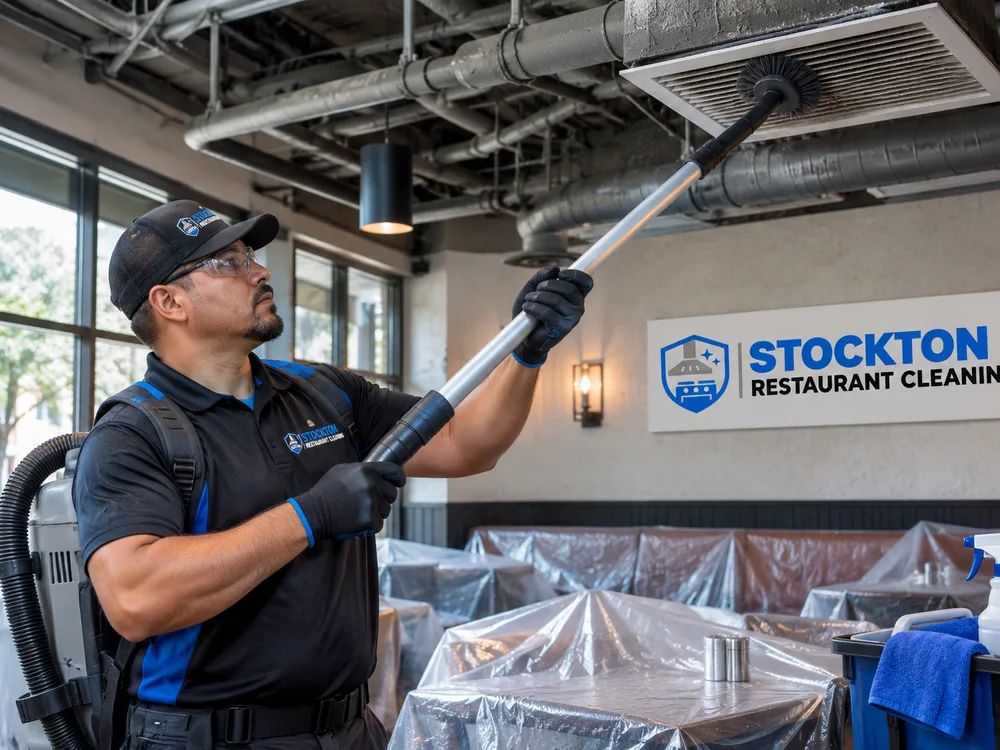
A trained restaurant cleaner using a HEPA vacuum extension to remove dust from exposed ceiling pipes and vents over a protected dining area.
Overhead surfaces are cleaned before lower surfaces and floors.

Floor Care

Restaurant Floor Cleaning Matched to the Surface

Good restaurant floor cleaning starts with dry soil removal. Crumbs and grit are vacuumed or swept from open areas, corners, beneath movable furniture, and along baseboards. The floor is then cleaned with a product suited to its finish. Using too much chemical can leave residue that attracts soil and makes a floor feel tacky.

Tile and grout may need dwell time and mechanical agitation to release embedded soil. Resilient floors require controlled moisture and neutral chemistry when appropriate. Entry areas often need extra attention because wind, rain, parking-lot soil, and food traffic concentrate grime near the doors. Greasy back-area floors may require a compatible degreaser, careful rinsing, and recovery of the dirty solution.

Wet-floor controls and drying time are included in the work sequence. Service is normally scheduled when guests and staff will not cross active cleaning zones. We also keep restroom tools separate from dining-area tools and use fresh microfiber by zone to limit cross-contamination.

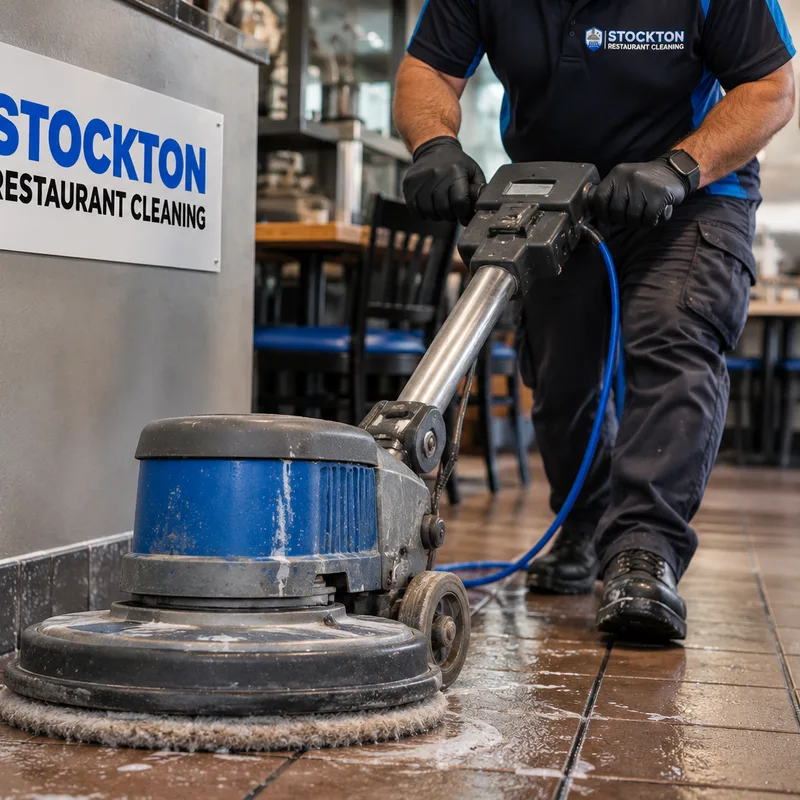
Close view of a cleaner using a low-speed floor machine on restaurant tile, with baseboards and furniture edges already detailed.
Chemistry and agitation are selected for the flooring and soil type.

Our Cleaning Process

How We Build a Restaurant Cleaning Plan

  1. Step 01

    Walk Through the Property

    We review the dining room, bar, restrooms, entries, floors, back areas, access points, and overhead surfaces. Managers can identify recurring issues, delicate finishes, restricted areas, and tasks handled by employees.

  2. Step 02

    Define the Written Scope

    The scope records cleaning zones, task frequency, exclusions, preferred service window, access instructions, alarm procedures, and any products that should or should not be used. Periodic high dusting or deep floor work can be separated from nightly tasks.

  3. Step 03

    Set the Work Sequence

    Cleaning generally progresses from higher surfaces to lower ones and from cleaner zones toward dirtier zones. Restrooms use dedicated tools. Floors are completed near the end so staff do not track over freshly cleaned areas.

  4. Step 04

    Complete and Review the Work

    The crew follows the agreed checklist and records any access problem, damaged surface, unusual buildup, or task that needs manager approval. Feedback can then be used to adjust future visits.

Front of House Standards

What a Reliable Front of House Cleaning Scope Should Include

Restaurant front of house cleaning in Stockton should be specific enough that both the manager and cleaning crew understand the standard. A useful scope names each area and task rather than relying on broad language such as “clean the dining room.” It may state that tables and chair frames are wiped, booth seams are vacuumed, ledges are dusted, glass is spot-cleaned, baseboards are addressed on a rotation, and floors are cleaned after furniture is moved where practical.

Frequency should follow actual use. Touchpoints and restroom fixtures may need attention during every scheduled visit, while vents, high ledges, and detailed wall cleaning can follow a periodic rotation. Event-driven restaurants may need added service after unusually busy nights. Outdoor dust during Stockton's dry season can also increase the attention needed at entrances, window ledges, and nearby dining surfaces.

A commercial cleaning scope does not replace the restaurant's food-safety plan. Managers remain responsible for defining approved procedures for food-contact surfaces, active preparation equipment, and chemical storage. Any task near exposed food or sensitive equipment should be discussed before service so responsibilities are clear.

A walkthrough turns recurring trouble spots and operating constraints into a clear cleaning scope that fits your restaurant's schedule.

Call for a Free Quote

Frequently Asked Questions

Restaurant Cleaning Questions

How much do Restaurant Cleaning Services cost in Stockton?

Pricing depends on square footage, cleaning frequency, floor type, number of restrooms, soil level, access, and the tasks included. A compact dining room with routine service requires a different crew plan than a large restaurant with a bar, multiple restrooms, quarry-tile back areas, and periodic High Dusting. An on-site walkthrough is the reliable way to confirm the exact price and written scope.

Can cleaning be scheduled after the restaurant closes?

Yes, service can be planned around closed or low-traffic periods when crew availability and property access allow. Stockton restaurants should provide clear instructions for doors, keys, alarms, parking, closing staff, and the time by which floors must be dry. The agreed service window is recorded before recurring work begins.

What is included in Restaurant Front Of House Cleaning Stockton businesses request?

Front of house service can include entries, host stations, waiting areas, dining furniture, booths, ledges, partitions, reachable glass, baseboards, touchpoints, and floors. The exact list is set during the walkthrough because layouts differ. Bars, restrooms, patios, high surfaces, and detailed floor restoration should be identified separately rather than assumed.

Does Restaurant Restroom Cleaning Stockton service include supplies?

Cleaning chemicals and tools can be addressed in the service proposal, while paper goods, soap, liners, and dispensers should be assigned clearly to either the restaurant or cleaning provider. Restroom tools should remain separate from dining-area tools. Managers should also identify any approved products required for specialty fixtures or finishes.

Can you clean the back of house and cooking equipment?

Back-of-house service may include accessible floors, corridors, storage areas, employee spaces, and non-production surfaces when listed in the scope. Equipment interiors, hood and exhaust systems, grease traps, and certain food-contact or regulated tasks are separate work and should not be assumed. Restaurant Back Of House Cleaning Stockton requests are reviewed area by area.

How often should High Dusting and deep floor cleaning be scheduled?

Frequency should be based on visible buildup, ceiling configuration, ventilation, cooking activity, traffic, floor material, and the restaurant's appearance standard. Exposed overhead pipes may collect dust faster than enclosed ceilings, while grout and textured tile often hold soil sooner than smooth resilient flooring. A walkthrough can establish routine tasks and a practical rotation for periodic work.

How soon can recurring restaurant cleaning start?

The start date depends on walkthrough availability, scope approval, crew scheduling, access arrangements, and whether an initial deep clean is needed. A Stockton property with keys, alarm instructions, restricted areas, and service hours already documented can usually move through setup more efficiently. The confirmed schedule is provided after these details are reviewed.
Plan the Work

Build a Cleaning Plan Around Your Restaurant

Tell Stockton Restaurant Cleaning about your dining room, bar, restrooms, floors, back areas, operating hours, and recurring problem spots. We will review the property and define the work before service begins.