Restaurant Deep Cleaning in Stockton

Restaurant Deep Cleaning Services in Stockton

Detailed cleaning for commercial kitchens, walk-in coolers and hard-to-reach areas, planned around your operating hours and the condition of your facility.

✓ Kitchen and cooler scope
✓ High dusting available
✓ Scheduling based on access
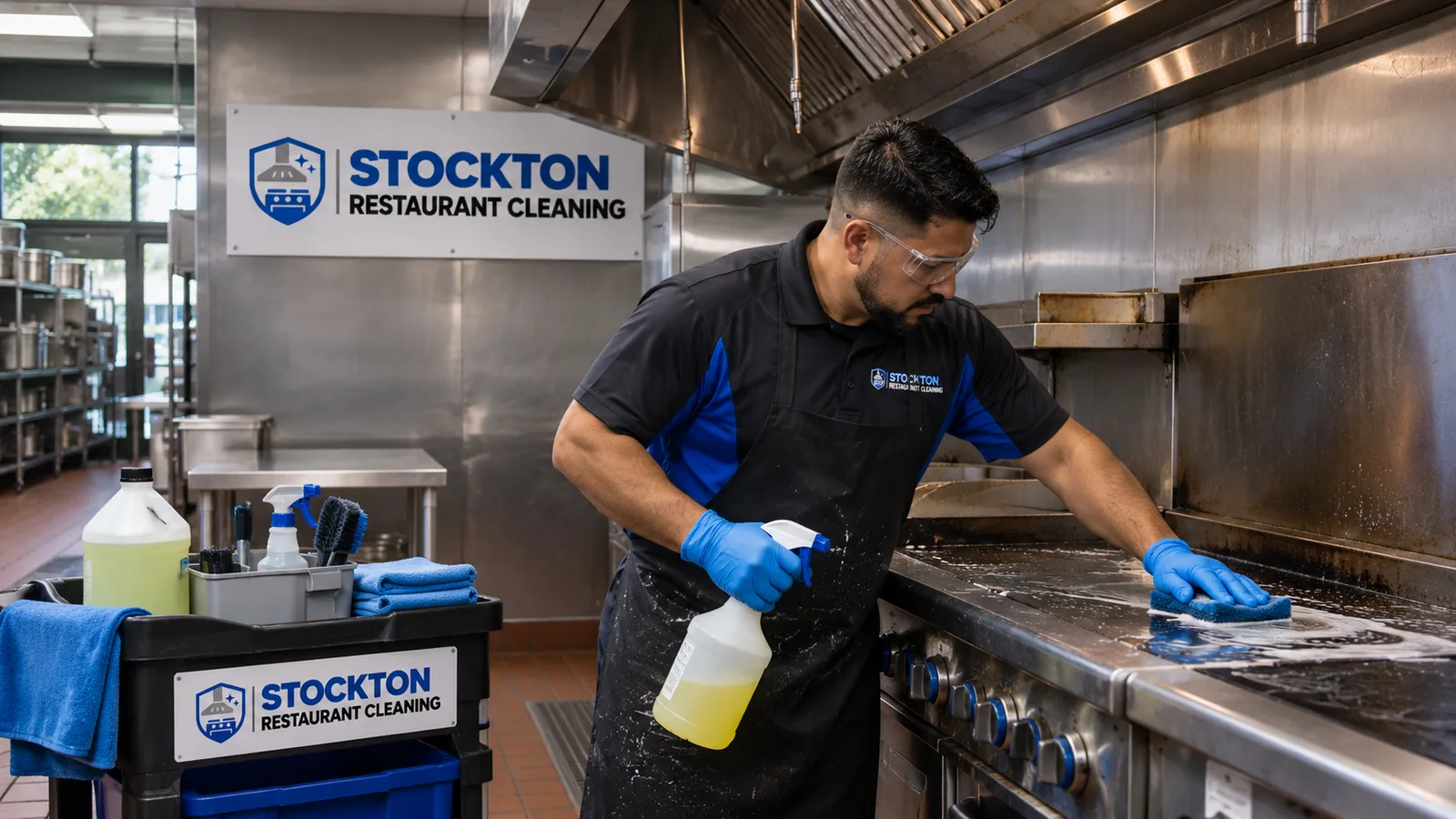
A professional cleaner degreasing stainless steel cooking equipment in an empty Stockton restaurant kitchen, with organized tools and proper protective gear visible.

Detailed Cleaning Scope

A Deeper Clean for Working Restaurant Kitchens

Restaurant Deep Cleaning Services address the grease, food residue and dust that routine closing work may leave behind. Stockton Restaurant Cleaning builds the scope around your equipment, access, operating schedule and priority areas. The work may cover cook lines, equipment exteriors, floors, walls, walk-in coolers, shelving and elevated surfaces.

For every job, a professional restaurant company in Stockton approaches the cleaning as planned commercial work rather than a quick wipe-down. Before cleaning begins, we identify movable equipment, sensitive controls, floor drains, food-storage areas and surfaces that require a product-specific method. The resulting scope gives managers a clear record of what is included and what must be prepared before the crew arrives.

Our location on W Fremont Street places the team near Downtown Stockton and the Crosstown Freeway, useful access points for restaurants operating across the city. Businesses near the Downtown waterfront may need work timed around events and customer traffic. Miracle Mile restaurants often have compact back-of-house layouts where staging and access matter. In Lincoln Center, deep cleaning may need to fit shopping-center access rules and shared delivery activity. Each condition affects scheduling, equipment movement and crew setup.
Restaurant Cleaning Areas

What Restaurant Detailed Cleaning Can Include

Cooking Line and Equipment Exteriors

Degreasing may cover stainless steel fronts, sides, legs, casters, splash zones and reachable areas around fryers, ranges and prep equipment. Controls, gas connections and electrical components are protected rather than saturated.

Floors, Walls and Base Areas

Soil is loosened with the appropriate degreaser, followed by agitation, recovery and rinsing where the surface allows. Attention goes to grout lines, wall-floor junctions, corners and the spaces exposed when movable equipment is pulled out.

Prep and Storage Areas

Work can include emptied shelves, rack uprights, washable wall surfaces and exterior surfaces in dry storage or prep zones. Food, utensils and single-service items must be removed or fully protected before chemical cleaning starts.

Walk-In Cooler Cleaning

An agreed scope may cover emptied shelving, walls, floors, door gaskets and reachable fan-guard exteriors. The crew uses methods suited to cold, food-storage environments and avoids directing moisture into electrical parts.

High Dusting in Stockton Restaurants

High dusting targets accessible pipes, ledges, vents, light exteriors and structural surfaces where dry debris settles. HEPA-filtered vacuuming or controlled wiping helps prevent loose dust from being spread onto lower surfaces.

Waste and Utility Zones

Washable surfaces around refuse staging, mop sinks and utility areas can be included when access and drainage are suitable. These spaces are scoped separately because soil levels and cleaning methods often differ from food-preparation areas.

Safe Cleaning Sequence

Kitchen Deep Cleaning Requires the Right Sequence

Commercial kitchen deep cleaning in Stockton starts with shutdown and preparation. Food is removed or protected, cooking equipment is cool, and the manager confirms which appliances may be moved. Crews then work from high surfaces toward the floor so dislodged soil is collected during later stages.

Dry removal comes before wet cleaning when dust or loose debris is present. Greasy surfaces may require dwell time, mechanical agitation and repeated recovery rather than a stronger chemical. Stainless steel, painted walls, sealed tile, grout, rubber gaskets and concrete each respond differently, so inconspicuous testing may be appropriate. Safety data sheets should be available for products used on the job, and food-contact surfaces must be treated according to the product label before the area returns to service.

Deep cleaning does not replace specialist exhaust-system work, fire-suppression service, pest control or equipment repair. Hood interiors, ducts and rooftop exhaust components may require a qualified provider working to applicable fire-code and NFPA 96 requirements. We identify these boundaries in the written scope so restaurant managers know which areas are included.

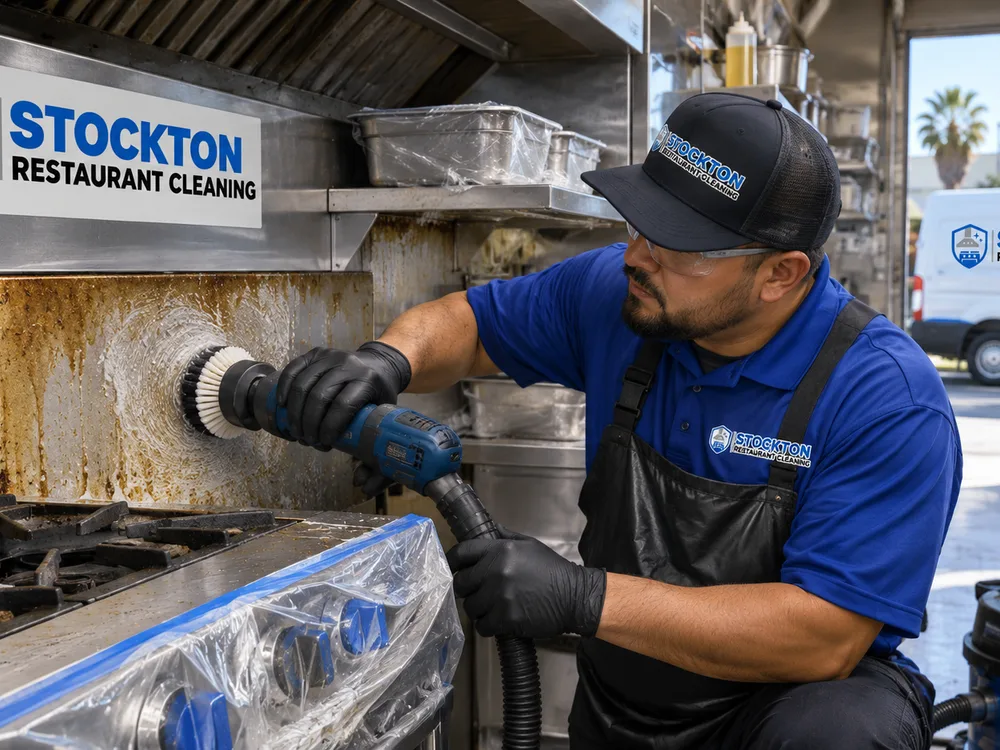
A restaurant deep cleaner using controlled agitation on grease buildup beside a commercial range while sensitive controls and nearby food-contact surfaces are protected.
Controlled degreasing separates heavy soil without flooding sensitive equipment.

Our Cleaning Process

How Professional Restaurant Deep Cleaning Works

  1. Step 01

    Site Review and Priorities

    A walkthrough identifies the kitchen layout, affected surfaces, soil level, equipment access and any walk-in or high-dusting work. Managers can flag recurring trouble spots and areas that must reopen first.

  2. Step 02

    Written Scope and Scheduling

    The plan states the included areas, exclusions, preparation duties and expected work window. Scheduling may be arranged after closing, on a dark day or during another approved shutdown period, depending on access and crew needs.

  3. Step 03

    Restaurant Preparation

    The operator removes exposed food and small wares, cools equipment, provides authorized access and confirms which items may be moved. Shutoff or disconnection work is handled only by authorized personnel when required.

  4. Step 04

    Detailed Cleaning

    The crew follows a high-to-low sequence using dry removal, product dwell time, agitation and controlled recovery. Methods are adjusted for the surface and kept away from unprotected controls, connections and open food.

  5. Step 05

    Final Review

    The supervisor checks the agreed areas, notes inaccessible locations or maintenance concerns, and reviews the completed scope with the restaurant contact before the kitchen is placed back into operation.

Cold Storage Care

Walk-In Cooler Cleaning Without Careless Saturation

Walk-in cooler cleaning should be planned around inventory, temperature control and safe access. The operator decides where food will be held while sections are emptied. Cleaning can then proceed in zones, which may limit how long products remain out of their normal storage environment.

Shelves and racks are cleaned according to their material and condition. Crews pay close attention to floor edges, thresholds, door tracks and gaskets, where residue can collect. Water use is controlled near evaporator components, fan motors, wiring and damaged finishes. Ice buildup, refrigerant issues, active leaks and damaged insulation are maintenance conditions, not cleaning tasks, and should be referred to the appropriate technician.

The San Joaquin County Environmental Health Department oversees retail food facilities in the county. Cleaning supports routine sanitation, but the restaurant operator remains responsible for food handling, temperature control and compliance with applicable requirements. A clearly documented scope helps avoid confusion between cleaning work and equipment maintenance.

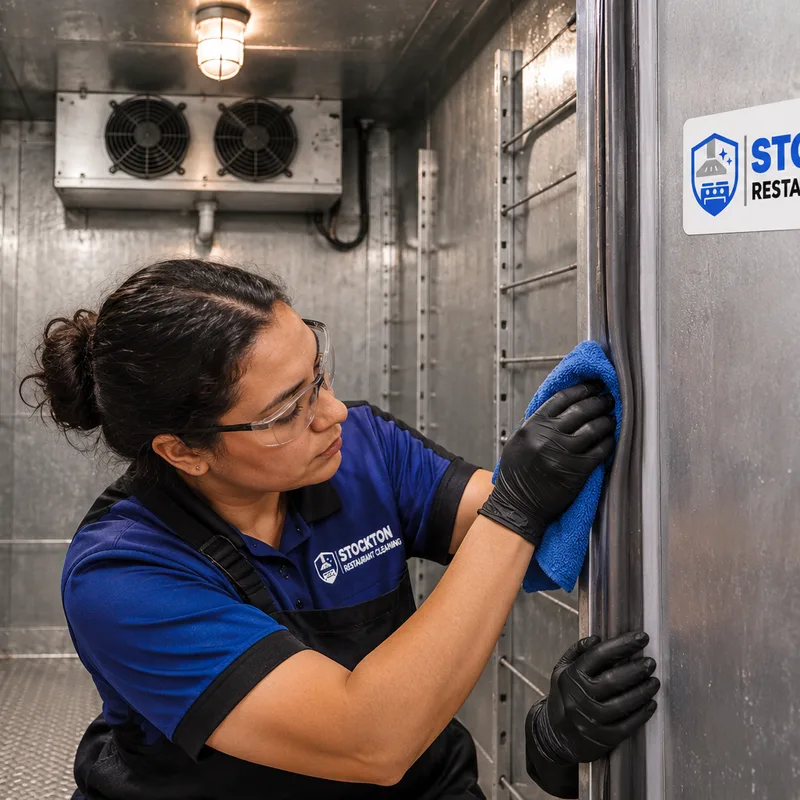
An emptied commercial walk-in cooler with a cleaner wiping rack uprights and door gaskets while refrigeration components remain dry and protected.
Cooler work is organized around emptied storage zones and moisture-sensitive components.

Scheduling Guidance

When to Schedule Restaurant Deep Cleaning Services

A deep clean can be scheduled as periodic preventive work, before reopening a closed kitchen, after equipment changes or when accumulated soil has moved beyond normal shift cleaning. The right interval depends on cooking volume, menu, ventilation performance, staffing routines and how quickly grease reaches floors, walls and equipment sides.

Stockton's hot summers can make an already warm cook line harder to shut down and service during operating hours. Overnight or planned closure windows may offer better conditions, but the kitchen still needs adequate ventilation and enough time for surfaces to dry before reopening. Downtown event traffic, shopping-center access limits and shared loading areas can also determine when equipment, tools and waste can move through the property.

Managers should request a new review after a menu change, equipment replacement or long lapse between detailed cleanings. Heavy fryer use creates a different cleaning profile than a bakery, café or cold-preparation kitchen. A current walkthrough is more dependable than pricing based only on square footage.

Get a written cleaning scope that identifies priority areas, preparation duties and scheduling needs before work begins.

Call for a Free Quote

Frequently Asked Questions

Questions About Restaurant Deep Cleaning in Stockton

How much does commercial kitchen deep cleaning in Stockton cost?

Pricing depends on kitchen size, grease level, equipment access, included surfaces and the work window. A compact kitchen with accessible equipment requires less labor than a large cook line with heavy buildup, cooler shelving and extensive high dusting. Stockton Restaurant Cleaning reviews the facility before confirming a written price and scope.

How long does a restaurant detailed cleaning take?

The cleaning window is set after a walkthrough because layout and condition matter more than floor area alone. A focused cook-line job may fit within one closure period, while a large kitchen with a walk-in cooler and elevated dust may require staged work. Downtown access restrictions or shopping-center delivery rules can also affect setup and removal time.

Can restaurant deep cleaners work after closing?

After-hours work may be arranged when access, staffing and the required shutdown period permit it. Equipment must be cool, exposed food must be removed or protected, and authorized personnel must handle any required utility shutoffs or disconnections. The schedule should also leave enough time for inspection and drying before food preparation resumes.

Must the walk-in cooler be emptied before cleaning?

The specific work zone must be emptied or isolated so food is protected and surfaces are accessible. The operator is responsible for approved temporary storage and safe product temperatures. Cleaning can sometimes be staged by zone, but the approach depends on the cooler layout, inventory and refrigeration conditions.

Is high dusting safe over food-preparation areas?

High dusting is performed only after exposed food, utensils and preparation surfaces have been removed or protected. Dry debris is captured with controlled methods such as HEPA-filtered vacuuming before lower surfaces are cleaned. Loose ceiling material, damaged insulation or inaccessible electrical fixtures may require another qualified trade.

Do you clean commercial hood ducts and rooftop exhaust fans?

General degreasing around the cook line does not automatically include exhaust ducts, internal hood plenums or rooftop fans. Those components may require a qualified exhaust-system cleaner working under applicable fire-code and NFPA 96 requirements. The walkthrough identifies boundaries so the written scope distinguishes kitchen cleaning from specialist hood service.

What should a manager do before the crew arrives?

Managers should cool equipment, remove exposed food and small wares, clear agreed shelves, identify movable appliances and arrange property access. They should also report damaged surfaces, active leaks and sensitive equipment before work starts. These steps give the crew usable access and reduce the risk of moisture or cleaning products reaching protected items.

Plan the Work

Plan a Thorough Clean Around Your Restaurant Schedule

Tell Stockton Restaurant Cleaning about the kitchen, walk-in cooler, high surfaces and operating window. We will review the conditions and prepare a clear scope for the work.