Commercial Kitchen Floors
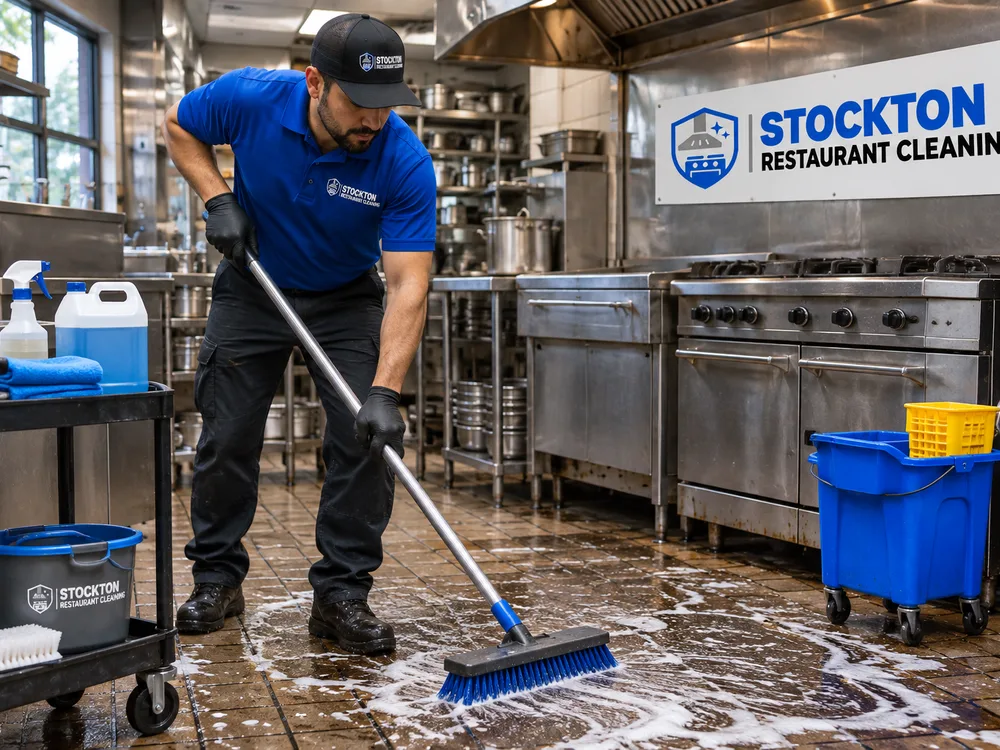
Degreasing and scrubbing address tracked oil and food soil on compatible flooring. The method is selected for the floor material, grout condition, drainage, and slip risk.
Serving Stockton, San Joaquin County, California & surrounding areas
Open 24/7
Commercial Restaurant Cleaning in Modesto
Dependable cleaning for commercial kitchens, dining rooms, restrooms, and employee areas, scheduled around your hours and documented with a clear scope.
Cleaning Scope
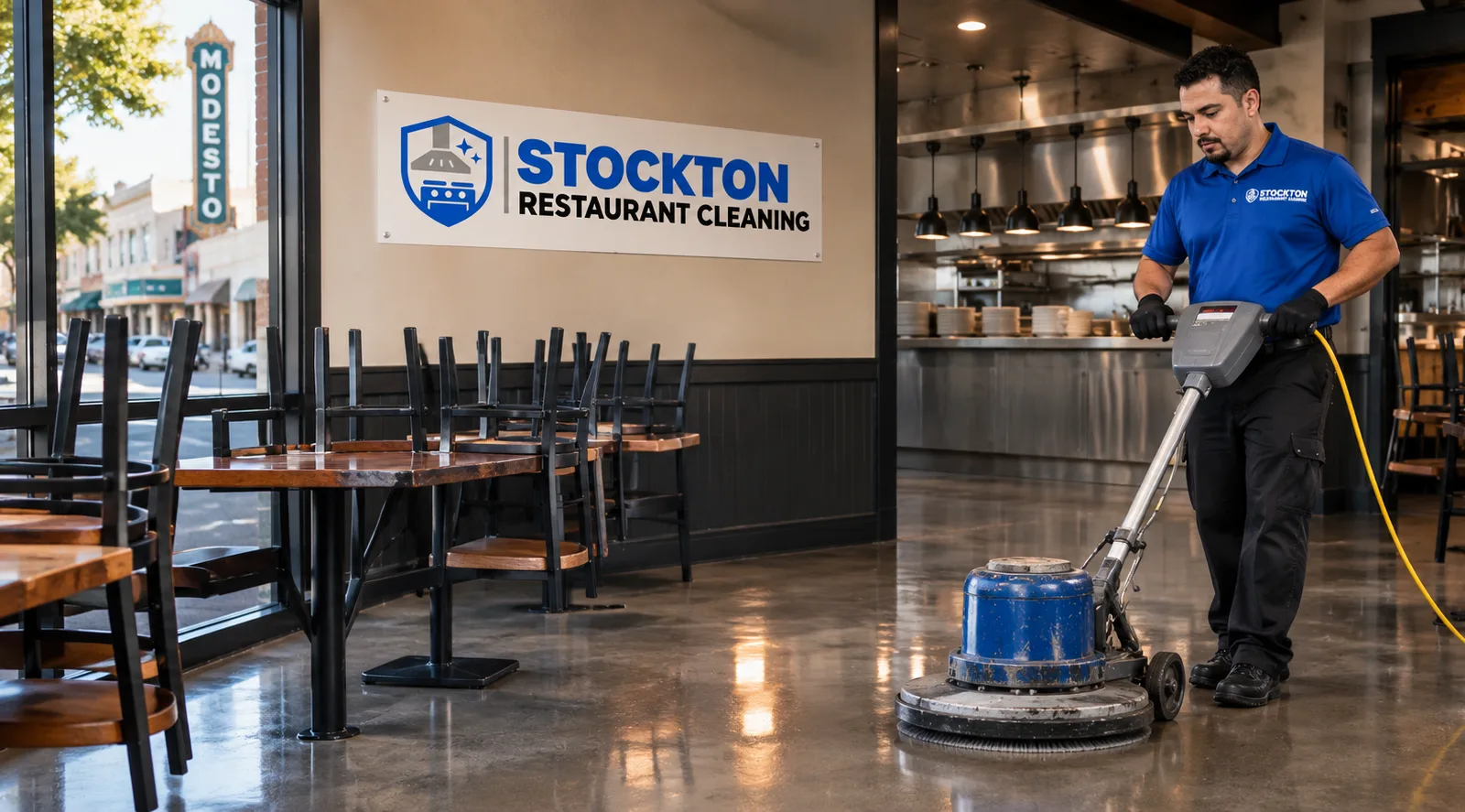
Restaurant Cleaning Modesto businesses rely on must fit the realities of food service. Grease settles on floors and lower surfaces, crumbs collect beneath fixed equipment, and restrooms need attention throughout the week. Stockton Restaurant Cleaning builds the scope around your floor plan, operating hours, traffic, and internal closing duties rather than applying a generic office-cleaning checklist.
Our restaurant crew in Stockton handles the work with commercial cleaning methods suited to food-service settings, including planned dwell time for disinfectants and separate tools for kitchen, dining, and restroom zones. We discuss access, alarm procedures, approved products, sensitive surfaces, and any areas your staff will clean before our arrival. This creates a practical division of work and reduces missed tasks.
Modesto restaurants near Downtown may need cleaning arranged around evening foot traffic, deliveries, or limited access. Businesses near Vintage Faire Mall can face heavier guest turnover, while restaurant corridors along McHenry Avenue often need schedules that accommodate extended service hours. In every setting, the plan should account for how the restaurant actually operates.
Food-Service Cleaning
A complete restaurant cleaning plan separates back-of-house work from front-of-house work. In the kitchen, routine tasks may include degreasing washable floors, cleaning baseboards, wiping non-food-contact exterior surfaces, and addressing buildup around equipment legs and accessible edges. Food-contact surfaces require products and procedures approved by restaurant management, followed by any rinsing required by the product label.
Dining-room service can include tables and chairs, booths, partitions, ledges, doors, glass, entry areas, and hard floors. Restroom work typically covers fixtures, partitions, dispensers, mirrors, touchpoints, and floors. Offices, employee break areas, storage corridors, and loading access can be added when they are part of the agreed scope.
Color-coded microfiber cloths and mop equipment help reduce cross-contamination between zones. High-touch surfaces are cleaned before a disinfectant is applied because visible soil can interfere with the product. The disinfectant must then remain wet for its label-specified contact time. These details matter more than a quick spray-and-wipe routine.
Cleaning Areas
Degreasing and scrubbing address tracked oil and food soil on compatible flooring. The method is selected for the floor material, grout condition, drainage, and slip risk.
Cleaning can cover hard floors, carpeted areas, tables, chairs, booths, ledges, glass, doors, and guest touchpoints after service or before opening.
Fixtures, partitions, mirrors, dispensers, touchpoints, and floors receive dedicated tools and products that are kept separate from kitchen and dining equipment.
Exterior panels, equipment legs, casters, and reachable edges can be degreased without opening, dismantling, or servicing restaurant equipment.
Periodic work can target baseboards, corners, wall splash, vents that are safe to reach, chair legs, grout lines, and buildup missed during daily closing.
A concentrated service can prepare a new or remodeled restaurant for operations after construction dust and contractor debris have been removed.
Our Cleaning Process
We review the kitchen, dining room, restrooms, storage routes, flooring, access points, and problem areas. The walk-through also identifies delicate finishes and equipment that cleaning staff should not move.
The written scope states what receives attention during each visit and what is scheduled periodically. Daily closing duties, professional cleaning tasks, and excluded work are separated clearly.
Service may be arranged after closing, before opening, or during another low-traffic period. We confirm keys, alarm instructions, secure areas, and the person authorized to answer questions.
The crew follows the agreed task list, keeps restroom tools separate, and checks priority areas before leaving. Any access problem or unusual condition can then be reported promptly.
Seasonal traffic, menu changes, special events, and revised opening hours can alter cleaning needs. The scope and visit frequency can be reviewed when those conditions change.
Local Operating Conditions
San Joaquin Valley conditions can affect restaurant interiors. Dry weather and agricultural activity can contribute outdoor dust, while rainy periods bring tracked moisture and soil through entrances. Entry mats, floor attention, and cleaning frequency should change with conditions rather than remain fixed throughout the year.
Location also shapes the plan. A Downtown Modesto dining room with late events may need a narrow overnight service window. A quick-service location along McHenry Avenue may place more emphasis on entry glass, restrooms, and frequent floor care because of steady turnover. Restaurants near Vintage Faire Mall may need cleaning timed around retail traffic and shared access rules. These operating details belong in the scope before recurring service begins.
Commercial cleaning supports a restaurant's sanitation program, but it does not replace employee food-safety duties, pest control, hood and exhaust-system cleaning, grease-trap service, equipment repair, or fire-suppression work. Those specialized responsibilities should remain with trained staff or the appropriate contractor.
Pricing Factors
Recurring restaurant cleaning in Modesto typically ranges from about $300 to $1,200 per visit, while a smaller limited-scope visit may cost less and a large kitchen or intensive first clean may exceed that range. Final pricing depends on square footage, visit frequency, grease buildup, floor types, restroom count, equipment access, service timing, and whether periodic detail work is included. A walk-through is needed to separate routine tasks from deep cleaning and specialized contractor work. The exact cost is confirmed after the restaurant and requested scope are reviewed.
Reviewing the Scope
A useful proposal identifies rooms, surfaces, tasks, and frequency. It should distinguish routine cleaning from periodic detail work and state whether supplies, consumables, floor equipment, or waste handling are included. Pay attention to exclusions involving hood systems, ducts, grease traps, rooftop equipment, pest activity, biohazards, and moving heavy appliances. These jobs require different training, access, or licensing.
Ask how tools are separated between restrooms and food-service areas. Confirm who selects products for food-contact surfaces and how label directions will be followed. If your restaurant has sealed concrete, quarry tile, luxury vinyl tile, natural stone, carpet, or specialty finishes, identify them during the walk-through because one chemical or brush does not suit every material.
Access matters too. The proposal should reflect your closing routine, alarm process, locked storage, delivery schedule, and opening deadline. A realistic schedule gives the crew enough time to complete the agreed work without interfering with employees, vendors, or guests.
Arrange a restaurant walk-through to define the rooms, frequencies, access plan, and priority cleaning tasks before service begins.
Frequently Asked Questions
Yes, service can often be arranged after closing, before opening, or during another low-traffic window. The best time depends on staff departure, deliveries, alarms, shared access, and the hours needed for floors to dry before employees return.
Frequency should match guest volume, menu, floor materials, internal closing duties, and the speed at which grease or soil returns. Some restaurants need several visits each week, while others use weekly service with periodic detail cleaning. The schedule can be adjusted for Downtown events, retail traffic near Vintage Faire Mall, or seasonal changes.
Food-contact surfaces can be included only under an agreed procedure using products appropriate for the surface and restaurant sanitation plan. Product labels determine dilution, contact time, and whether rinsing is required. Restaurant management should identify any manufacturer restrictions before work starts.
No, routine janitorial cleaning generally does not include internal hood, fan, or exhaust-duct cleaning. Kitchen exhaust systems are specialized fire-safety work and should be handled by a qualified contractor. Accessible exterior hood surfaces may be included if they are identified in the scope.
Heavy buildup may require an initial deep clean before recurring maintenance begins. The walk-through determines which surfaces can be safely degreased, whether equipment must be moved by restaurant staff, and whether any work belongs to a hood cleaner, equipment technician, or another specialist.
A visit may take a few hours or most of an overnight window, depending on square footage, condition, crew size, and the number of tasks. A compact dining room with limited kitchen work takes less time than a large operation with heavy floor soil, several restrooms, and detailed back-of-house cleaning.
Restaurant staff should complete the agreed closing duties, secure food, identify hot equipment, clear designated surfaces, and provide access instructions. If appliances need to be moved, that responsibility should be assigned in advance because cleaners should not disconnect gas, water, or electrical connections.
Plan the Work
Tell Stockton Restaurant Cleaning about your floor plan, schedule, and current problem areas. We will help define a practical scope for the kitchen, dining room, restrooms, and employee spaces.