Restaurant cleaning is usually priced after a walkthrough because floor area, visit frequency, restroom count, kitchen scope, soil level, and access time all affect labor. A small dining room with limited nightly tasks is different from a full-service restaurant needing frequent restroom care and detailed back-of-house floor cleaning. Stockton Restaurant Cleaning provides a scope based on the actual Lodi property and confirms what is included before recurring work begins.
Yes, after-hours service can be arranged when the restaurant provides a workable access window and clear security instructions. The schedule should account for the kitchen crew's closing routine, late guests, deliveries, alarms, and the time floors need before staff return. Available timing depends on the location and requested frequency.
Kitchen cleaning can include approved floors, sinks, washable surfaces, and equipment exteriors when the area is prepared and the work is listed in the scope. Employees must secure food, utensils, and sensitive controls first. Hood interiors, exhaust ducts, fire-suppression systems, equipment repair, and some heavy grease-removal tasks require specialty providers and are not assumed to be part of routine janitorial cleaning.
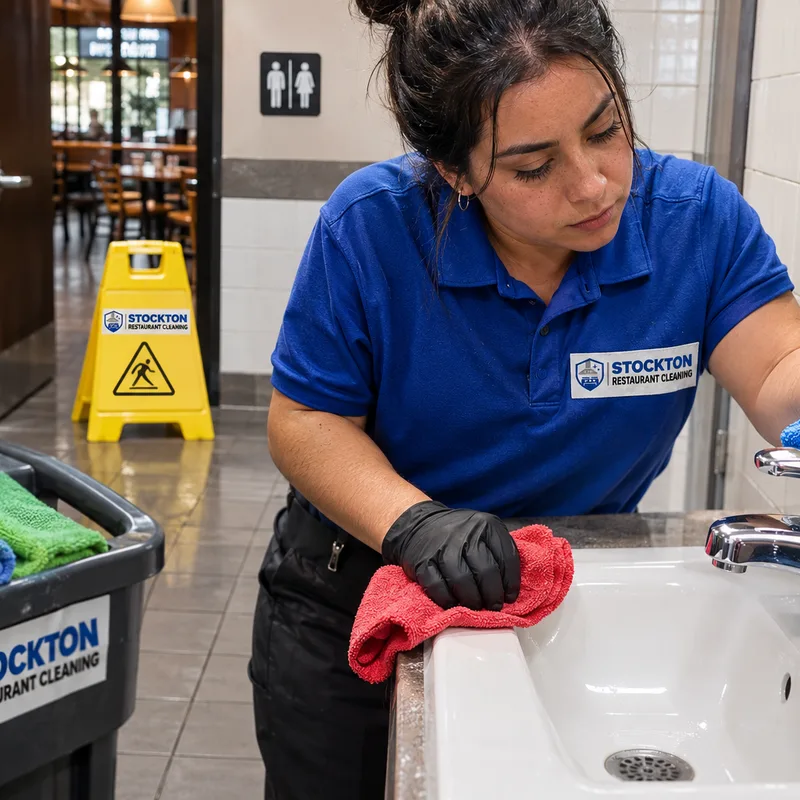
A typical restroom scope includes toilets, urinals where present, sinks, faucets, mirrors, partitions, dispensers, touchpoints, floors, and waste containers. The exact list can also include consumable restocking if the restaurant supplies paper goods and soap. Persistent leaks, drain problems, broken dispensers, and damaged grout are reported for repair rather than concealed with fragrance.
The right frequency depends on guest traffic, operating hours, menu, flooring, restroom use, and what employees clean during each shift. High-use restrooms and dining-room floors may need attention every operating day, while baseboards, vents, grout, and wall details can follow a rotation. Event traffic near downtown Lodi or seasonal activity may justify temporary schedule changes.
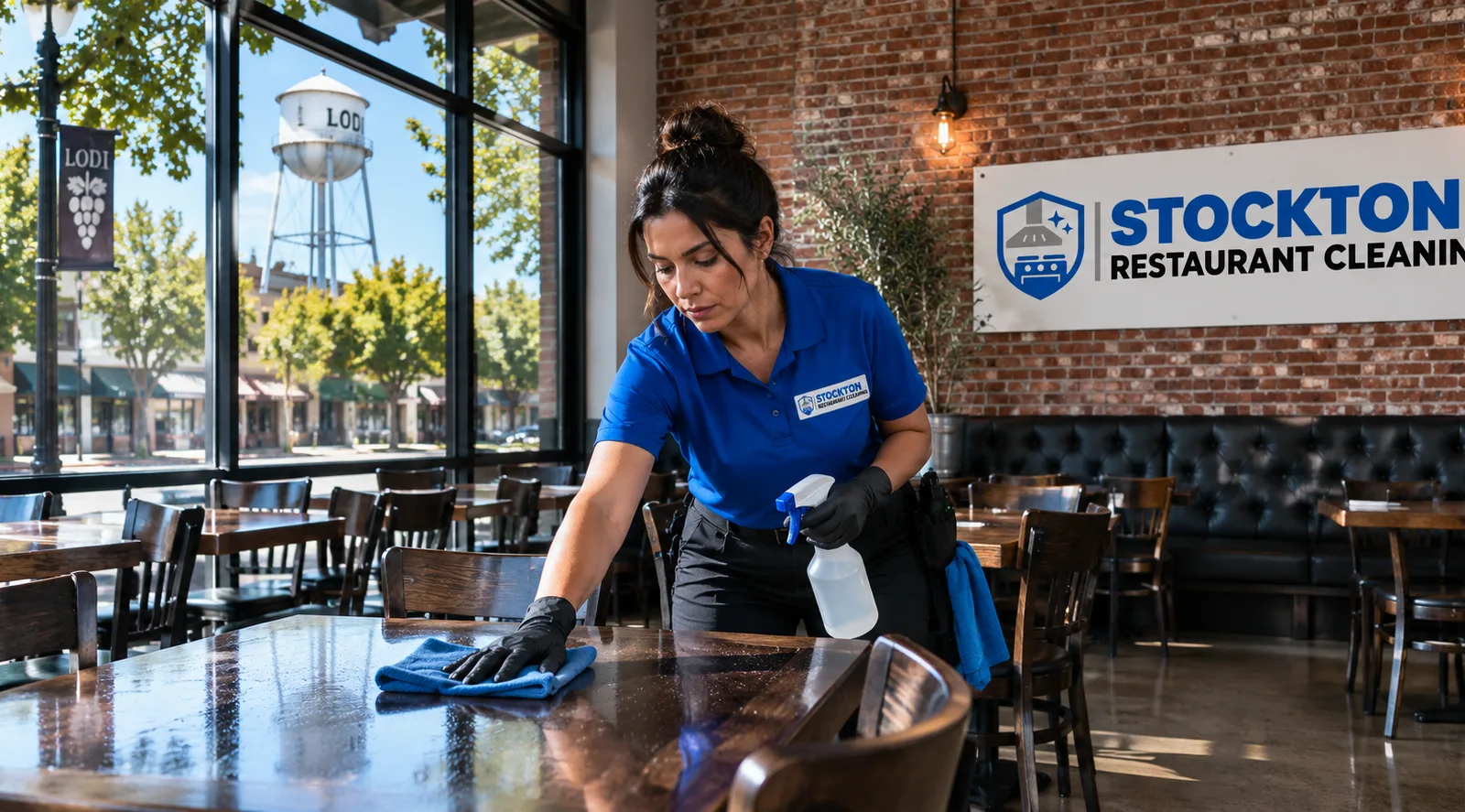
A full closure is not always required, but the work area must be separated from food preparation and guest traffic. Many restaurants schedule service after closing because cleaners can move through dining areas and place wet-floor signs without interfering with customers. If daytime work is requested, the scope should identify which rooms can be serviced safely and when.
Yes, approved product requirements can be documented before work begins, subject to label directions and surface compatibility. Provide any franchise specifications, prohibited chemicals, Safety Data Sheets, and food-contact procedures during the walkthrough. Products must never be mixed or used in a way that conflicts with their labels.
Secure food, utensils, cash, personal items, and sensitive equipment, then provide access instructions and identify restricted areas. The restaurant should also point out delicate surfaces, known leaks, alarm procedures, waste locations, and any products cleaners must use or avoid. A clear closing routine helps the first visit stay within the scheduled access window.