Cook-Line Grease
Targeted restaurant floor degreasing breaks up oily film around fryers, ranges and other production areas. Heavy deposits may need repeated treatment rather than one overly aggressive pass.
Serving Stockton, San Joaquin County, California & surrounding areas
Open 24/7
Restaurant Floor Cleaning in Stockton
Remove stubborn grease, clean tile and grout, and give your staff a safer, more manageable floor without disrupting restaurant operations.
Cleaning Scope
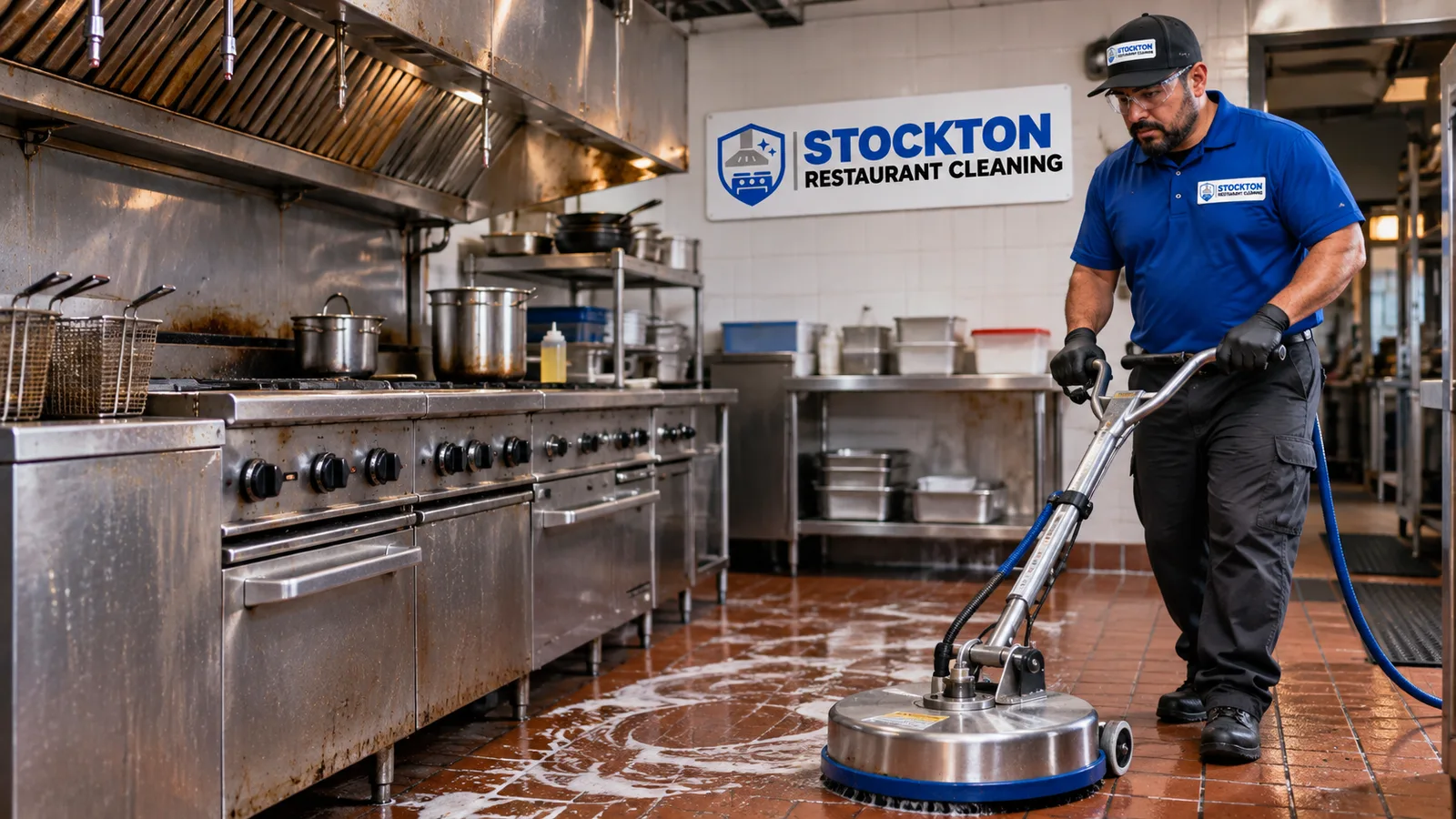
Commercial Kitchen Floor Cleaning tackles the grease film, food residue and embedded soil that routine mopping can leave behind. Stockton Restaurant Cleaning combines targeted degreasing with mechanical agitation and controlled recovery to clean tile, grout lines, edges and other difficult areas. The objective is a floor that looks better, feels less slick and is easier for staff to maintain between professional cleanings.
Our work is planned around the way each kitchen operates. Stockton's restaurant specialists inspect the flooring material, buildup, drainage and access before selecting chemicals or equipment. We can schedule work around prep, service and closing routines, then define which equipment must be moved by restaurant staff before the appointment. This approach is useful for independent restaurants, institutional kitchens, cafés and other commercial food facilities.
Stockton's dry summers can increase dust tracked through receiving and employee entrances. Once that grit mixes with cooking oil and moisture, it can form a dark film along traffic lanes and grout joints. Restaurants near Downtown Stockton may also have compact kitchens and limited equipment clearance, while Miracle Mile dining spaces often combine guest-facing tile with back-of-house floors. Those differences affect access, dwell time and the equipment selected for the job.
Tile and Grout Care
Restaurant tile cleaning starts with identifying the surface. Quarry tile and ceramic tile are common commercial choices, but grout, transitions and previous coatings can respond differently to chemicals and agitation. A cleaner that cuts grease must also be compatible with the floor. We test uncertain areas and follow product label requirements rather than relying on an excessively strong chemical mix.
Grout lines are porous and sit slightly lower than the tile face, so soil and greasy slurry tend to collect in them. Restaurant grout cleaning uses dwell time and mechanical agitation to loosen that buildup. Edges beneath counters, around equipment legs and near floor-to-wall transitions receive separate attention because a large floor machine may not reach them.
Floor drains require controlled work. Dirty solution should be recovered and handled according to the facility's approved wastewater procedures, not pushed outdoors or into a storm drain. Stockton businesses are within the City of Stockton and San Joaquin County regulatory environment, and each operator remains responsible for applicable food-facility and wastewater requirements. Professional cleaning supports sanitation routines, but it does not replace required daily cleaning, pest control or health inspections.
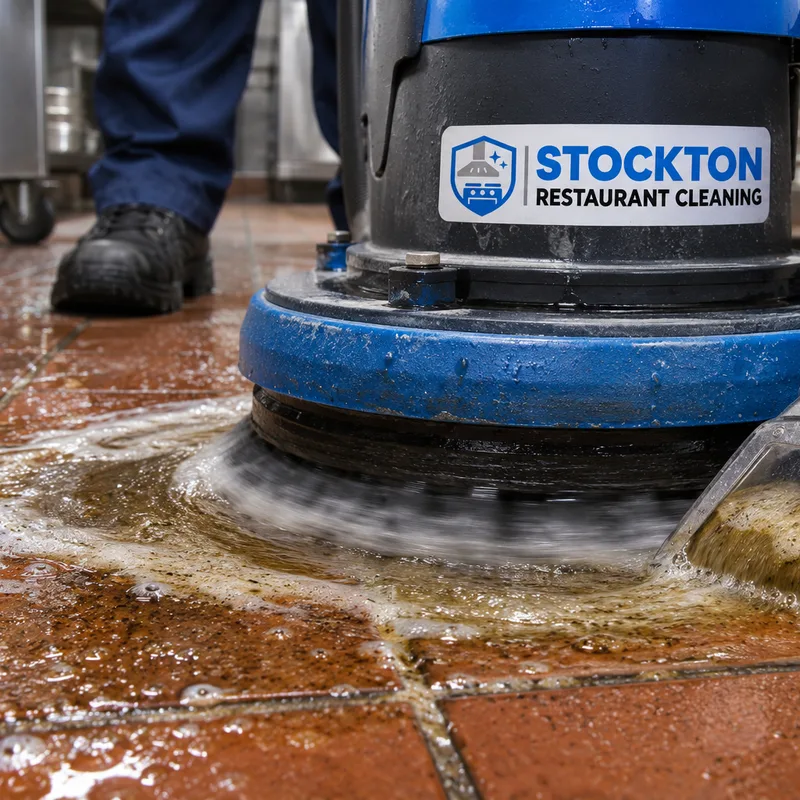
Agitation reaches textured tile faces and recessed grout joints.
Cleaning Areas
Targeted restaurant floor degreasing breaks up oily film around fryers, ranges and other production areas. Heavy deposits may need repeated treatment rather than one overly aggressive pass.
Agitation lifts embedded soil from recessed grout lines, corners and transitions where mop water often settles.
Entry routes, server paths, dish areas and receiving corridors collect tracked soil and food residue. Cleaning can be concentrated where buildup is heaviest.
Detail work addresses floor-to-wall transitions and accessible spaces around fixed equipment. Movable equipment requirements are agreed upon before service.
When included in the scope, commercial floor cleaning can cover compatible tiled dining spaces as well as the back of house, with methods adjusted for the surface and finish.
A planned interval prevents the job from depending on visible buildup alone. Frequency is based on cooking volume, flooring texture and the results of daily care.
Our Cleaning Process
We identify flooring materials, grease concentration, damaged grout, drains, access limits and areas that need special protection. The written scope can separate cook lines, dish areas, walk-ins, storage rooms and dining floors.
Loose debris is removed, sensitive surfaces are protected and approved movable items are cleared according to the agreed plan. Safety signs and access controls keep people out of the active work zone.
A compatible commercial degreaser is mixed and applied according to its label. It receives the required dwell time without being allowed to dry on the floor.
Mechanical scrubbing loosens bonded soil on the open floor. Hand tools or smaller equipment address grout joints, corners and tight spaces around fixed fixtures.
The released soil and solution are extracted or recovered rather than redistributed with a mop. Additional rinsing removes residue that could leave the surface tacky.
We inspect the cleaned zones, note stains or damage that cleaning cannot correct, and allow suitable drying time before normal traffic resumes.
Stockton Kitchen Conditions
The right interval depends on what reaches the floor each day. A high-output fryer line generally needs professional degreasing more often than a light-prep kitchen. Textured tile, deep grout joints, crowded equipment and long operating hours can also accelerate buildup. We use those conditions to recommend a scope instead of assigning the same schedule to every restaurant.
Downtown Stockton restaurants may need compact equipment and tightly timed access because kitchens can have narrow service routes. Along Pacific Avenue and the Miracle Mile, mixed front-of-house and back-of-house flooring may call for separate chemical and equipment choices. In larger commercial areas near Hammer Lane, receiving traffic can bring more grit into production routes. These practical conditions influence staging, drying time and cleaning frequency.
Daily staff care still matters. Sweep or dry-pickup loose debris before wet cleaning, use the correct dilution for the facility's approved floor chemical, change dirty solution, and keep mop heads clean. Avoid flooding damaged grout or forcing wastewater toward exterior drains. Professional Restaurant Floor Cleaning Stockton operators can then focus on bonded grease and detailed areas rather than repeating routine janitorial work.
Pricing Factors
Commercial kitchen floor cleaning in Stockton typically costs about $0.35 to $1.00 per square foot, with many small minimum-service visits falling around $300 to $700. Heavy grease removal, detailed grout work or tightly obstructed cook lines can cost more.
Final pricing depends on cleanable area, soil level, floor material, equipment clearance, access, required drying time and whether dining-area tile is included. Recurring service may be priced differently from a one-time restorative cleaning. The exact cost is confirmed after an inspection or service consultation.
A written scope clarifies which floors, edges and equipment zones are included, how the work will fit your operating hours, and what preparation your staff should complete.
Frequently Asked Questions
Many restaurant kitchen floor jobs take several hours, but the actual duration depends on square footage, grease level, obstructions and drying conditions. A compact Downtown Stockton kitchen may have less floor area yet require more detail work around tightly placed equipment. The schedule should include preparation, dwell time, agitation, recovery, rinsing and a safe drying period.
After-hours service may be available when arranged in advance and when the work area can remain clear through cleaning and drying. Closing procedures, staff departure, alarm access and the next prep shift all affect timing. The planned window should be long enough to clean the floor without rushing chemical dwell time or reopening it while wet.
Professional degreasing can remove residue that contributes to a slick surface, but it cannot make a floor slip-proof or repair worn texture, loose tile, damaged grout or drainage problems. Slip resistance also depends on footwear, spills, daily cleaning and floor condition. We identify visible defects and persistent problem areas so the operator can arrange appropriate repairs or safety measures.
Movable-equipment responsibilities are set during the inspection because cleaning staff should not disconnect gas, electrical, plumbing or fire-suppression connections. Freestanding racks, bins and light movable items may need to be cleared by restaurant staff. Fixed and connected equipment is cleaned around unless qualified personnel have safely moved it before the appointment.
The interval should be based on cooking volume, grease production, floor texture and how quickly buildup returns after daily cleaning. Fryer-heavy kitchens often need shorter intervals than light-prep operations. A first service provides a useful baseline, after which the plan can be adjusted using actual floor conditions rather than a generic calendar.
Grout cleaning can remove substantial surface soil and grease, but permanent discoloration, failed grout, old coatings and deeply absorbed stains may remain. A test area helps separate removable buildup from material damage. Cracked or missing grout needs repair after the floor is clean and dry; cleaning alone cannot restore failed joints.
Remove loose food, boxes, mats and agreed movable items, then secure food and food-contact materials away from the work zone. Staff should identify floor drains, damaged areas and any equipment that must remain operational. In Stockton, the operator should also confirm the facility's approved wastewater handling procedure so recovered cleaning solution goes to an authorized sanitary route rather than a storm drain.
Plan the Work
Tell Stockton Restaurant Cleaning about the floor material, problem areas and operating schedule. We will help define a practical cleaning scope for tile, grout and grease-heavy zones before work begins.