Cooking-Line Equipment
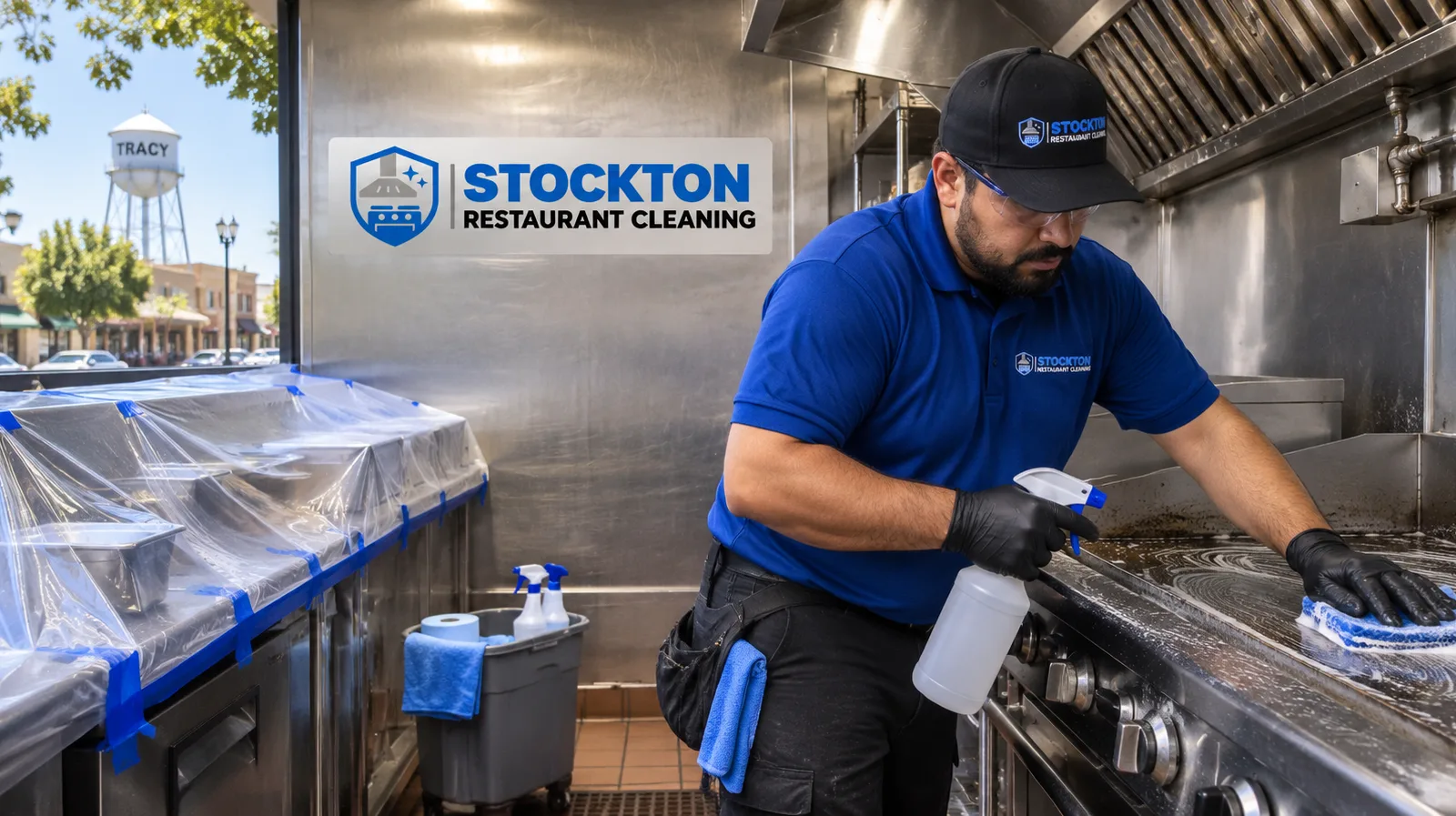
Exterior and accessible cleaning for ranges, griddles, fryers, ovens, cooktops, salamanders, and nearby stainless steel surfaces after equipment has cooled.
Serving Stockton, San Joaquin County, California & surrounding areas
Open 24/7
Commercial Equipment Care in Tracy
Detailed cleaning for commercial cooking equipment, prep stations, and hard-to-reach kitchen areas, planned around your operating schedule.
Cleaning Scope
Restaurant Equipment Cleaning Tracy requires more than wiping visible stainless steel. Grease migrates beneath appliances, residue collects around controls and seams, and buildup forms on casters, legs, shelves, and adjacent walls. Stockton Restaurant Cleaning addresses those overlooked areas with a scope based on the equipment, soil level, access, and the manufacturer's care requirements.
Our crew works as restaurant specialists serving the Stockton area, with service available for food businesses in nearby Tracy. That regional base makes it practical to coordinate work for independent restaurants, cafés, bakeries, bars, commissaries, and other commercial kitchens along the Interstate 205 and Interstate 5 corridor. Scheduling can be arranged around prep, service, delivery, and closing periods so cleaning does not needlessly disrupt the operation.
Before work starts, we identify which equipment may be moved safely, which utilities require attention from authorized personnel, and which surfaces need product-specific handling. The result is a clear plan rather than a generic checklist.
Equipment Cleaning Details
A cleaning scope may include ranges, griddles, fryers, ovens, cooktops, stainless steel tables, sinks, shelving, exterior refrigeration surfaces, small-appliance stations, and the floors and walls directly around equipment. Work can also address removable knobs, drip trays, crumb trays, grease channels, legs, casters, splash areas, and accessible spaces under or behind units.
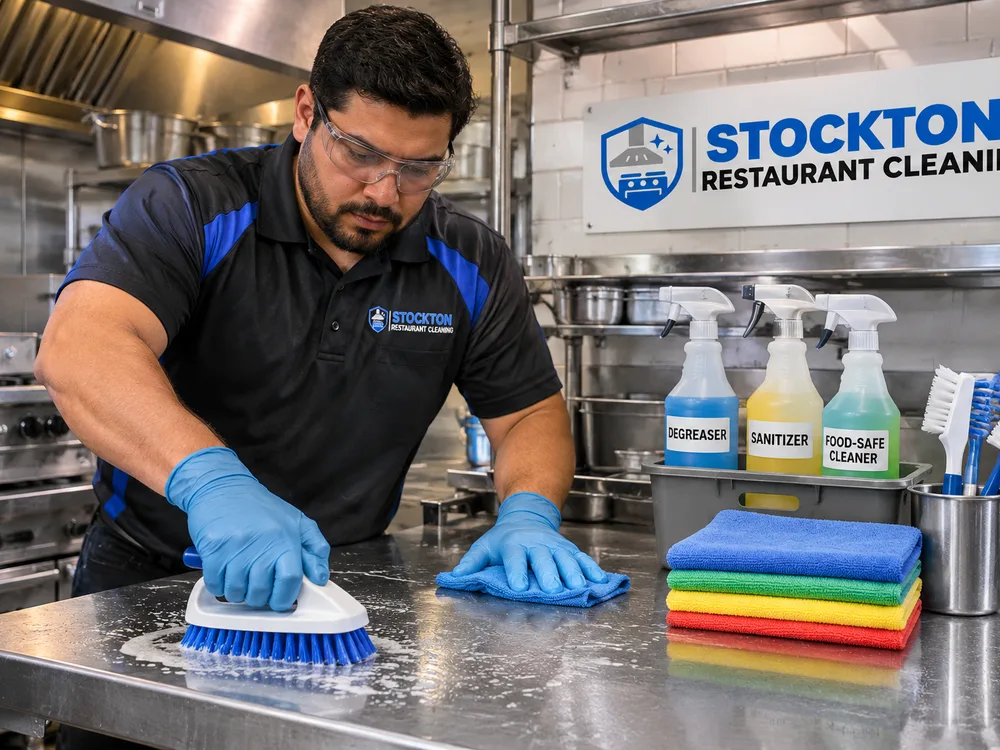
Food-contact components require careful handling. Approved products must be used at the correct dilution and contact time, followed by any rinse or sanitizing step required by the product label. Stainless steel should be cleaned with the grain, while painted panels, aluminum, control markings, gaskets, and glass may need different chemistry and tools. Abrasive pads and strong degreasers are not suitable for every surface.
Some tasks fall outside routine equipment cleaning. Internal electrical components, gas connections, refrigeration systems, fire-suppression equipment, and mechanical repairs should be handled by qualified trades. Our scope is established before cleaning begins, including any access limitations or items that restaurant staff must shut down, empty, cool, or disconnect.
Cleaning Areas
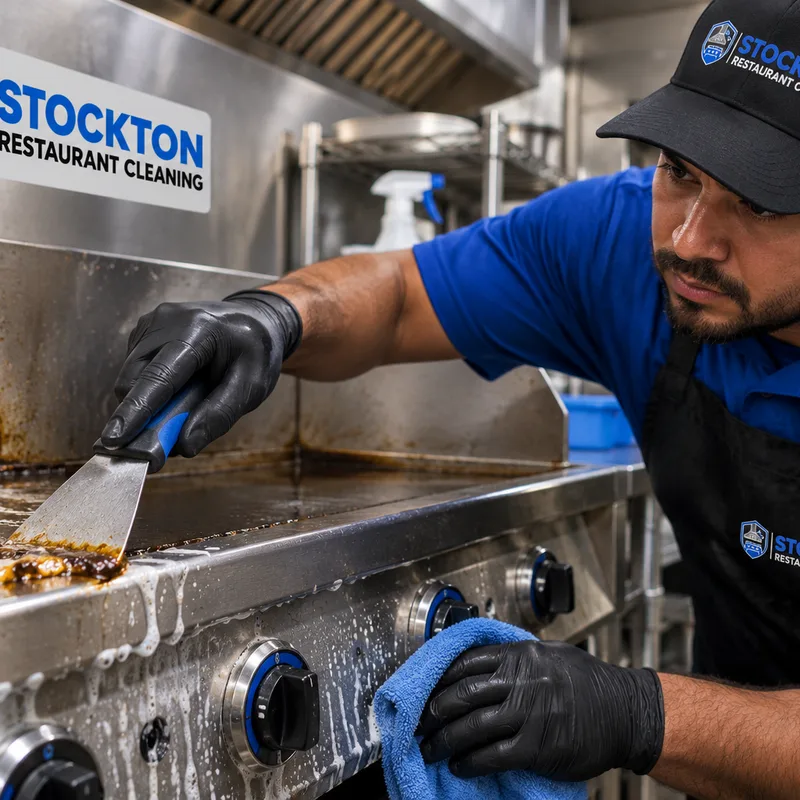
Exterior and accessible cleaning for ranges, griddles, fryers, ovens, cooktops, salamanders, and nearby stainless steel surfaces after equipment has cooled.
Attention to worktables, shelving, sink exteriors, splash zones, legs, casters, and residue traps around active preparation and washing stations.
Where movement is safe and authorized, equipment can be shifted to reach grease, crumbs, and soil on adjacent floors, walls, and utility-clear areas.
Cleaning can cover doors, handles, gaskets, tops, sides, and accessible exterior areas. Refrigerant systems, coils, and repairs require an appropriate technician.
Removable trays, knobs, channels, guards, and similar parts can be cleaned when removal is safe and consistent with manufacturer instructions.
A repeating schedule can focus on high-soil zones before residue hardens, while rotating lower-priority equipment through periodic detail cleaning.
Our Cleaning Process
We discuss the type and quantity of equipment, operating hours, current condition, access, and priority areas. Photos or an on-site review may be used to clarify the scope.
The restaurant is told which appliances must be cool, empty, or powered down and which stored goods or utensils should be removed. Gas, electrical, and water disconnections are addressed only by authorized people.
Food, clean utensils, open ingredients, and sensitive nearby surfaces must be removed or protected. The crew organizes tools and cleaning chemistry to limit cross-contamination.
Loose debris is removed first. Suitable products are then applied according to label directions, followed by agitation, soil removal, rinsing where required, and detail work around accessible edges and components.
Cleaned surfaces are checked, removable pieces are returned to their proper positions, and any condition that prevented access is documented. Restaurant staff can then complete their required opening or food-safety checks.
Professional Equipment Care
Commercial kitchens contain surfaces that react differently to heat, moisture, alkalinity, abrasion, and dwell time. Heavy grease may need a commercial degreaser, but the strongest product is rarely the right choice for every component. Chemical labels, Safety Data Sheets, manufacturer instructions, and the condition of the finish guide the method.
Cleaning and sanitizing are separate steps. Cleaning removes grease, food residue, and other soil. Sanitizing is performed on an already clean surface using a suitable product at its labeled concentration and contact time. A restaurant's food-safety procedures determine which food-contact surfaces require sanitizing after cleaning and before production resumes.
Tracy restaurants also operate under California food-facility requirements enforced locally by San Joaquin County Environmental Health. Professional cleaning supports daily sanitation work, but it does not replace employee cleaning schedules, pest-control records, equipment maintenance, or any inspection requirement. A useful service plan assigns responsibility clearly so routine staff duties and periodic detail cleaning work together.
Service Scheduling
The right service window depends on the kitchen. A breakfast operation may need work after lunch, while a dinner restaurant may prefer an overnight or closed-day appointment. Businesses near Downtown Tracy may have tighter delivery, parking, or rear-access windows, so entry and waste-handling plans should be settled before the crew arrives. Kitchens serving the retail areas near Interstate 205 often have long operating hours, which makes shutdown coordination especially important.
One-time deep cleaning is useful before reopening, after a period of deferred maintenance, or when equipment is being rearranged. Recurring service is better for kitchens with steady grease production because the scope can rotate between high-use appliances and less accessible detail areas. Fry stations and griddles may need attention more often than dry storage shelving or low-soil equipment exteriors.
A practical plan records what is included, how often each item is addressed, who prepares the equipment, and what conditions require additional time. This helps managers compare completed work with the agreed scope and adjust future visits as the menu, hours, or equipment lineup changes.
Pricing Factors
Restaurant equipment cleaning in Tracy typically ranges from $300 to $800 for a smaller targeted visit, while extensive kitchens or heavy-buildup projects may run from $800 to $2,000 or more. These are general, non-binding ranges, and recurring maintenance may be priced differently.
Final cost depends on equipment count, grease level, appliance size, access behind units, required shutdown time, and whether removable components need detailed work. Appliances that cannot be moved safely may limit the scope. The exact cost is confirmed after the kitchen and requested equipment are reviewed.
Share your equipment list, operating hours, and priority areas to receive a written scope built around the way your kitchen runs.
Frequently Asked Questions
A targeted equipment visit may take several hours, while a large line with heavy buildup can require a full shift or more. Equipment quantity, soil level, cooldown time, access, and the need to move units all affect duration. Tracy operators should also allow time to complete their own pre-opening checks before food preparation resumes.
The kitchen work zone generally must be out of production, but the entire restaurant may not need to close if operations can be separated safely. Cleaning is often scheduled after service, on a closed day, or during another approved shutdown period. Open food, clean utensils, and active prep cannot share the work area with degreasing activity.
Staff should empty the agreed equipment, remove food and utensils, allow hot appliances to cool, and clear access routes before the scheduled start. The written scope should state who handles power, gas, or water shutdowns. Only authorized people should disconnect utilities or move equipment attached to fixed connections.
Accessible areas behind cooking equipment can be cleaned when each unit can be moved without damaging utility connections, flooring, or the appliance. Casters, restraining devices, gas connectors, hardwired power, and limited aisle space may restrict movement. Those conditions should be checked during the scope review rather than assumed on arrival.
Frequency should be based on grease production, menu, hours, equipment design, and the restaurant's existing daily cleaning program. A busy fryer or griddle station may require frequent detail work, while lower-soil equipment can be rotated less often. San Joaquin County requirements and manufacturer instructions still apply regardless of the professional service schedule.
Equipment cleaning does not automatically include exhaust-system or fire-suppression service. Hood ducts, fans, filters, and suppression components may require separate scopes and qualified providers. Any proposal should identify the exact boundaries so managers know whether the cooking appliances, surrounding surfaces, or exhaust components are included.
Commercial appliances generally need to be shut down and cooled to a safe temperature before detailed cleaning begins. Heat can create burn risks, affect chemical performance, and damage some surfaces when cooler liquid is applied. The required cooldown period varies by appliance, so restaurant staff should follow manufacturer shutdown instructions.
Recurring cleaning can often be arranged around late closing times, provided access, shutdown duties, and the expected completion window are agreed in advance. Restaurants near Tracy's freeway retail areas may operate extended hours, making a rotating scope or closed-day visit more practical than cleaning every item in one session.
Plan the Work
Tell Stockton Restaurant Cleaning what equipment you use, where buildup is causing trouble, and when the kitchen is available. We will help define the scope, preparation requirements, and a workable service schedule.