Cooking-Line Exteriors
Accessible fronts, sides, splash zones, control surrounds, and adjacent surfaces can be degreased without representing the work as appliance repair or internal equipment cleaning.
Serving Stockton, San Joaquin County, California & surrounding areas
Open 24/7
Commercial Kitchen Cleaning in Manteca
Detailed degreasing, sanitation, and overhead cleaning planned around your kitchen's equipment, operating hours, and food-safety priorities.
Cleaning Scope
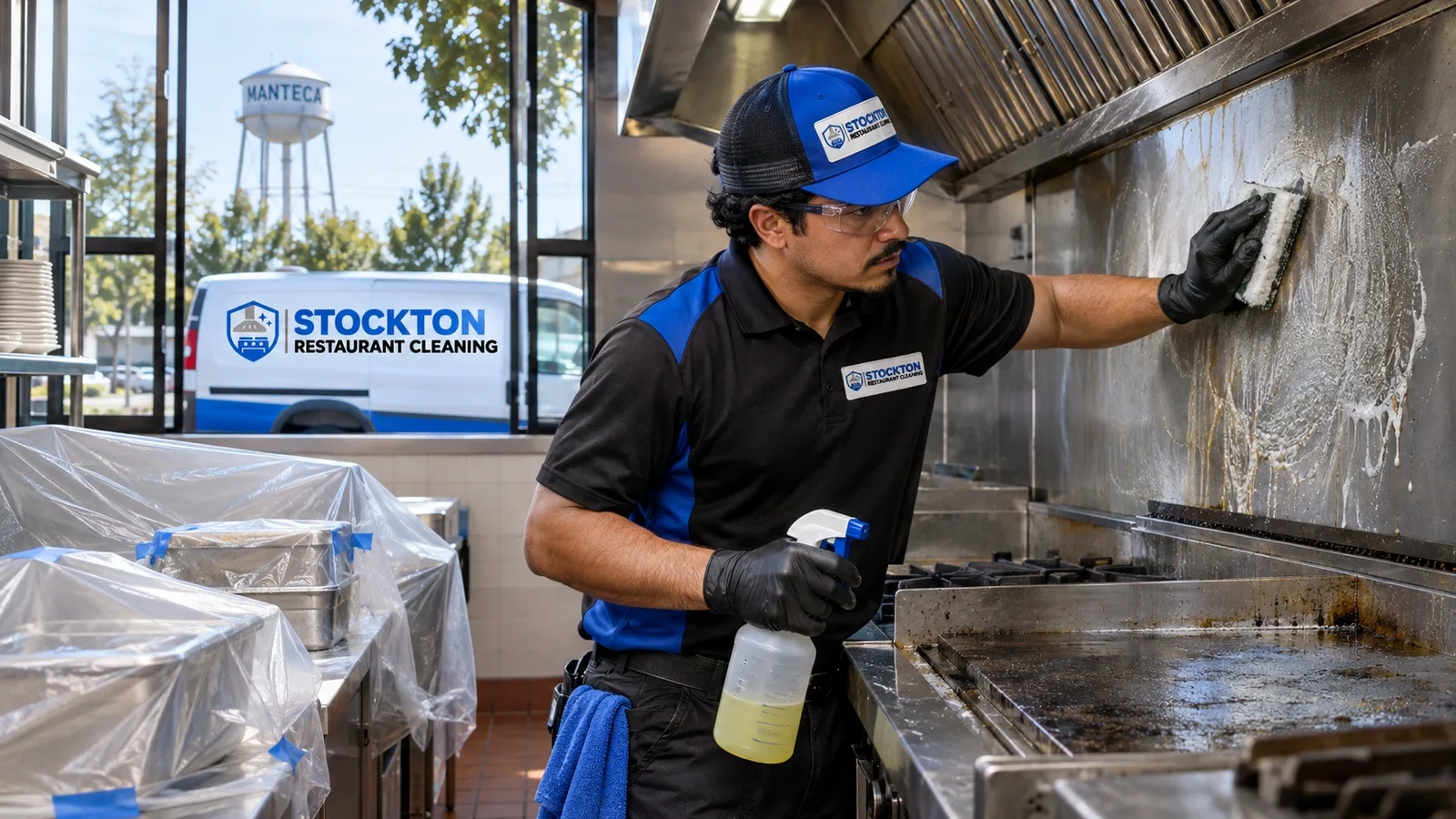
Restaurant Kitchen Cleaning Manteca addresses the grease film, food residue, dust, and soil that routine shift cleaning may not fully remove. Stockton Restaurant Cleaning develops the scope around the facility rather than applying the same checklist to every kitchen. The plan can cover cooking-line exteriors, stainless steel surfaces, walls, floors, floor edges, shelving, prep-area fixtures, and accessible overhead structures.
Our restaurant specialists across Stockton work with operators to identify priority areas, access restrictions, sensitive equipment, and practical service windows before cleaning begins. We are based at 611 W Fremont St, Suite 4 in Stockton and serve restaurant facilities in Manteca. The scope stays focused on agreed surfaces, with particular attention to grease migration near cooking lines and residue collecting beneath or behind movable equipment.
A sound cleaning plan also distinguishes food-contact surfaces from non-food-contact surfaces. Cleaning removes soil first. Sanitizing follows on suitable pre-cleaned surfaces with an appropriate product, dilution, and contact time. Equipment is handled according to manufacturer guidance, and food, utensils, and exposed ingredients must be protected or removed from the work area.
Commercial Kitchen Care
The exact scope depends on the kitchen layout, equipment, current condition, and what staff already clean during opening and closing duties. Typical work may include degreasing accessible equipment exteriors, wiping stainless steel backsplashes, cleaning wall surfaces, detailing shelving, removing buildup along floor edges, and scrubbing accessible areas beneath movable items.
Cooking oil can become a sticky film that traps airborne dust. That combination often appears on ledges, conduit, pipework, equipment tops, and nearby walls. It may require dwell time and controlled agitation rather than a quick spray-and-wipe approach. Product selection also matters. An alkaline degreaser may suit a grease-coated non-food-contact surface, while another material may require a milder cleaner to prevent damage.
Routine restaurant kitchen cleaning does not automatically include internal exhaust-duct cleaning, fire-suppression components, electrical interiors, appliance repair, or pest treatment. Those tasks may require qualified specialty providers. We identify scope boundaries before work starts so managers know which surfaces are included and which conditions need separate attention.
Cleaning Areas
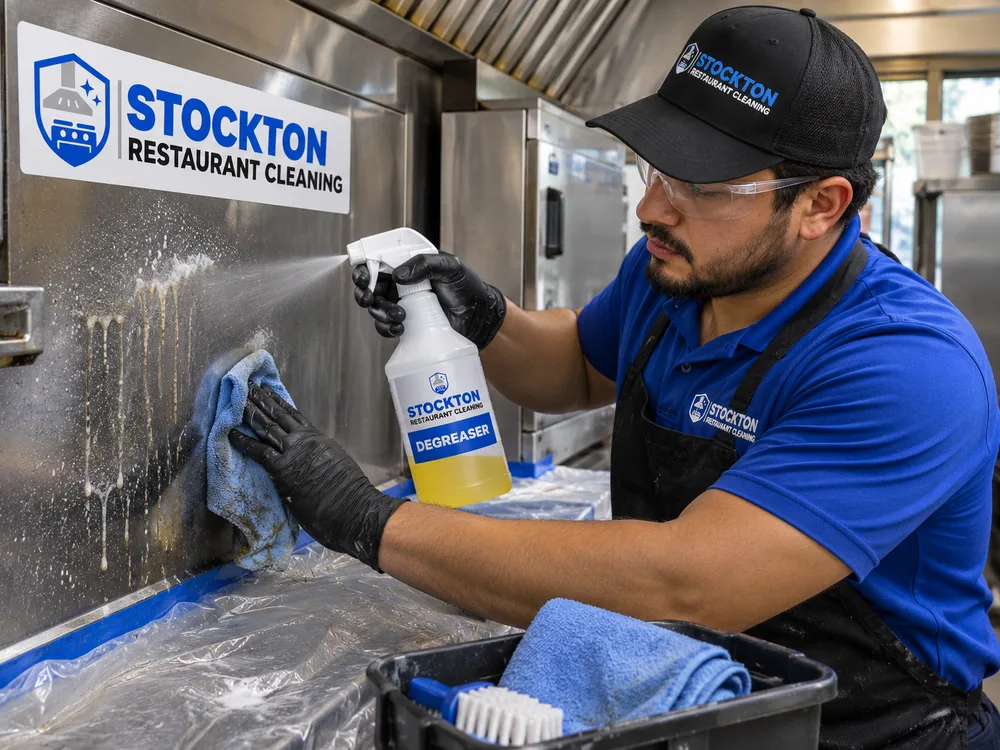
Accessible fronts, sides, splash zones, control surrounds, and adjacent surfaces can be degreased without representing the work as appliance repair or internal equipment cleaning.
Scrubbing can target traffic lanes, floor-to-wall edges, corners, and accessible spaces beneath movable equipment where grease and food soil collect.
Shelving, racks, wall surfaces, and fixture exteriors are cleaned according to the approved scope, with food and utensils protected before work begins.
Handles, push plates, switches, and other frequently touched surfaces can be cleaned and, when appropriate, sanitized after soil removal.
Washable wall finishes and stainless steel backsplashes receive material-appropriate cleaning to address splatter, grease film, and visible residue.
Accessible ledges, beams, vents, conduit, pipe exteriors, and equipment tops can be included when they can be reached and cleaned safely.
Overhead Kitchen Care
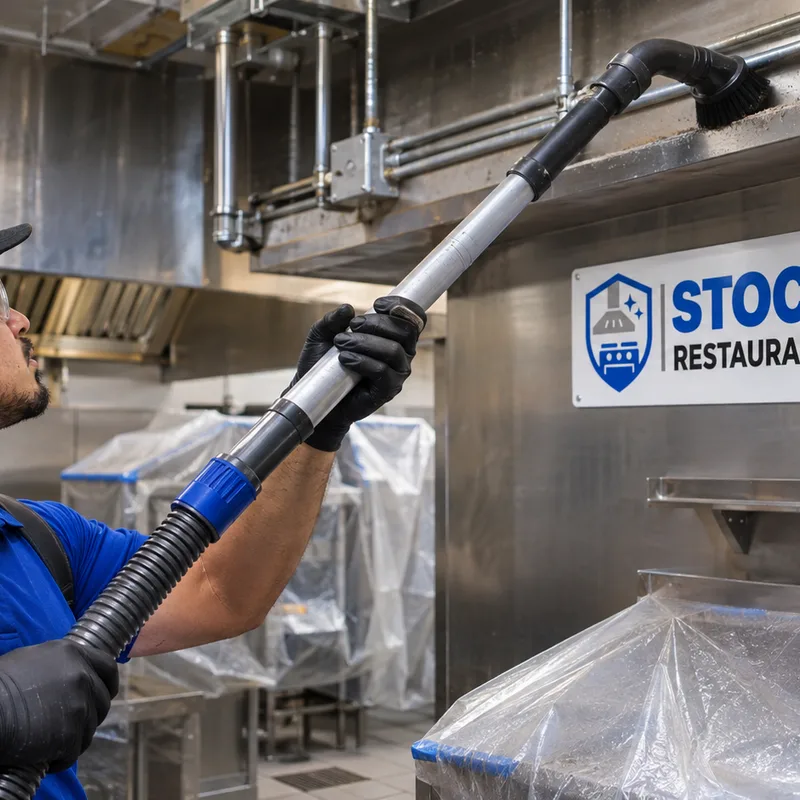
Restaurant high dusting in Manteca targets settled dust and grease-bound soil on elevated, accessible surfaces. Common locations include exposed beams, ceiling-level ledges, pipe exteriors, conduit, vent faces, light housings, wall tops, and the upper surfaces of equipment. These areas need controlled cleaning because loose debris should not be allowed to fall onto food, utensils, or recently sanitized prep surfaces.
The work area is prepared first. Food and small wares are removed or covered, nearby equipment is protected, and access is checked for heat, electrical, and slip hazards. High surfaces are generally cleaned before counters and floors so dislodged residue is captured during the lower-level cleaning that follows. Depending on the soil and material, technicians may use extension tools, commercial vacuums fitted with suitable filtration, microfiber media, or damp wiping methods.
High dusting is different from exhaust-system cleaning. Grease ducts, hood interiors beyond the agreed accessible surfaces, exhaust fans, and fire-suppression equipment may fall under separate inspection and service requirements. A walkthrough helps establish that boundary before the job is scheduled.
Our Cleaning Process
We review the cooking line, prep areas, storage zones, floors, overhead surfaces, access conditions, and known problem spots. The walkthrough also identifies fixed equipment and items restaurant staff can move.
The plan states which surfaces are included, the service window, preparation responsibilities, access needs, and exclusions. Recurring work can be divided between periodic detail cleaning and regular maintenance visits.
Exposed food and utensils are removed or protected. Sensitive controls, electrical components, and surfaces that should not receive moisture or strong chemistry are identified before products are applied.
When overhead work is included, elevated surfaces are addressed first. Technicians then degrease and detail lower surfaces, allowing suitable dwell time while preventing cleaning products from drying where possible.
Applicable surfaces are rinsed or wiped as the product label requires. Suitable pre-cleaned surfaces may then be sanitized using the specified dilution and contact time, followed by a review of the completed scope.
Manteca Service Planning
Downtown Manteca restaurants may have compact kitchens, limited staging space, or shared service access, so equipment movement and supply placement need to be planned carefully. Facilities near the Highway 120 and Highway 99 corridors may serve heavy meal-period traffic, making an after-hours or closed-day service window more practical. In newer commercial areas around Airport Way, larger footprints can require the scope to be divided into zones so each area receives enough time.
San Joaquin County's dry summer conditions can increase the amount of outdoor dust carried through delivery and employee entrances. Once that dust reaches a warm cooking area, grease vapor can bind it to upper ledges and equipment tops. Scheduled high dusting helps prevent layers from remaining out of sight between routine cleanings.
Frequency depends on cooking volume, menu, ventilation performance, housekeeping practices, and the type of equipment in use. A high-output fry or grill line may need more frequent degreasing than a low-grease preparation kitchen. The practical schedule is the one based on observed soil levels and operating conditions rather than a generic interval.
Reviewing the Proposal
A useful proposal names the surfaces to be cleaned instead of relying on broad phrases such as “deep clean.” It should address equipment movement, access to utilities, water availability, product restrictions, floor drainage, overhead work, and the condition expected before the crew arrives. It should also explain how food, utensils, and sensitive equipment will be protected.
Ask whether cleaning products are appropriate for the material and intended use. Stainless steel, painted walls, quarry tile, grout, resilient flooring, aluminum, and plastic components do not all tolerate the same chemistry or agitation.
For food-contact surfaces, soil must be removed before sanitizing, and the sanitizer label governs concentration and contact time.
Managers should clarify who handles internal exhaust systems, fire-suppression components, and equipment disassembly. Defined boundaries keep the crew within the agreed scope.
A walkthrough can turn a broad request into a practical cleaning plan with defined surfaces, preparation steps, and a service window that fits your operation.
Frequently Asked Questions
Restaurant kitchen cleaning is priced after the facility and requested scope are reviewed because square footage alone does not show the labor involved. Cost drivers include grease buildup, equipment density, overhead access, the number of areas included, whether movable equipment has been prepared, and whether the work is one-time or recurring. A walkthrough allows Stockton Restaurant Cleaning to provide a written scope based on the actual kitchen.
Yes, service can be planned around an agreed closed period or low-activity window, subject to crew availability and the amount of work requested. Restaurants near Manteca's major highway corridors may have long operating hours, so the walkthrough should confirm when equipment will be cool, food will be secured, and cleaned areas can remain undisturbed.
The duration depends on the size, condition, equipment layout, and number of surfaces included. A limited cooking-line detail may fit within one service window, while a kitchen with heavy grease, overhead dust, storage areas, and difficult access can require more time or phased work. The expected duration is set after inspection.
No, high dusting should not be assumed to include internal hood ducts, exhaust fans, or fire-suppression components. It generally addresses agreed accessible surfaces such as ledges, exposed beams, pipe exteriors, conduit, vent faces, and equipment tops. Internal exhaust-system cleaning may require a qualified specialty provider.
Staff should secure exposed food, remove utensils and small wares from the work area, identify sensitive equipment, and complete any agreed equipment movement. The kitchen should also be cool enough for safe work, with access to included areas available. Exact preparation requirements are documented during scheduling.
Yes, suitable food-contact surfaces can be sanitized when that task is included, but they must be cleaned first. The selected sanitizer must be used according to its label, including dilution, application method, contact time, and any rinse requirement. Restaurant management should disclose material restrictions and facility-specific sanitation procedures before work begins.
The right interval is based on visible soil, cooking volume, menu, ventilation, and routine staff cleaning rather than a universal schedule. Frying and grilling can produce faster grease accumulation, while San Joaquin County's dry summer dust can add to residue on entrances and overhead surfaces. An initial cleaning followed by condition checks can establish a practical recurring frequency.
Plan the Work
Tell Stockton Restaurant Cleaning about your facility, priority areas, operating schedule, and overhead-cleaning needs. We will help define the scope and preparation requirements before work begins.